Homework class #1 · English Elevator

Crystal Hunter: 100 Words, 10 Spots, 1 Expedition

Travel from a 58-degree cave in Mexico to the diamond pipes of South Africa and the mines of Hunan. On the way, collect 100 technical English words, learn how crystals really grow, and finish by making your own video that teaches other people about your crystals.

  • 100technical words
  • 10crystal spots
  • 7skills
  • ~15 minper day
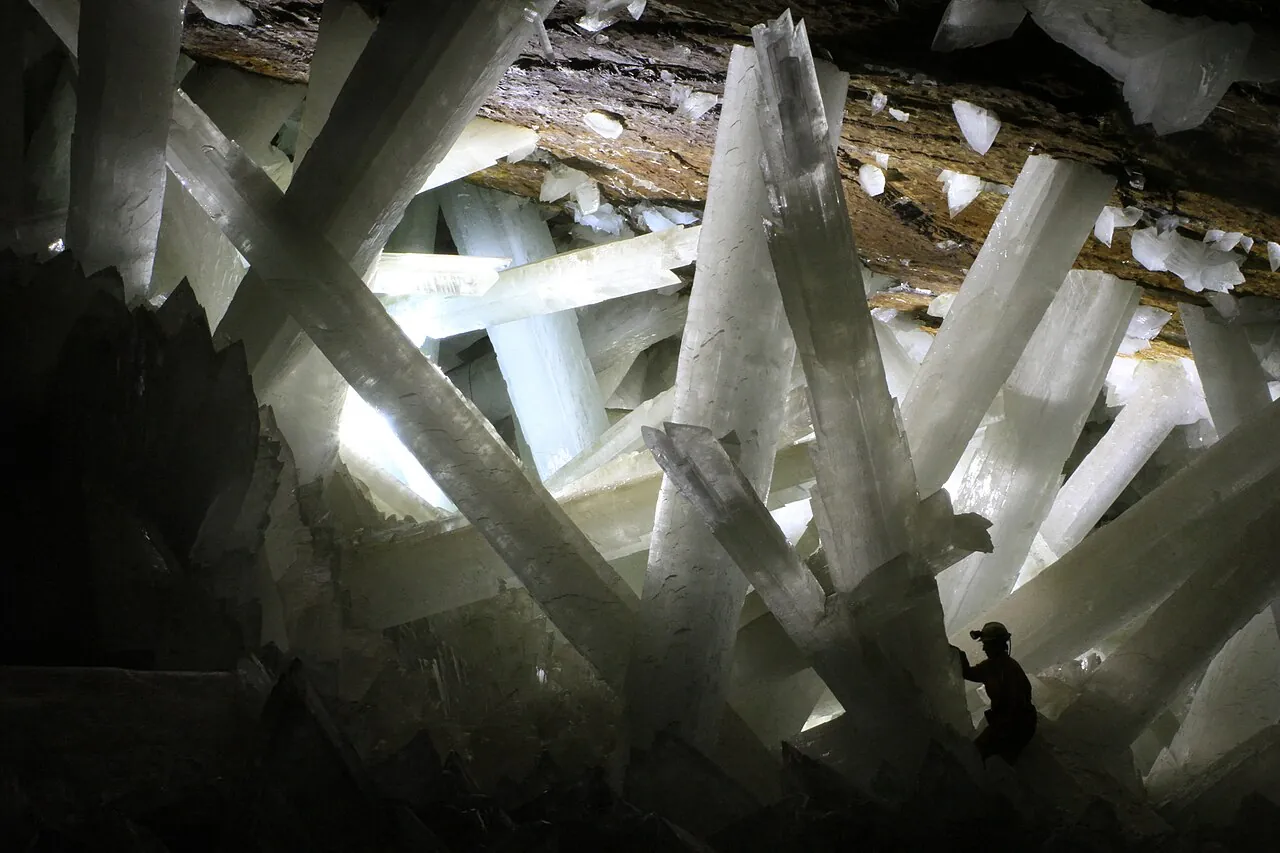
Giant white selenite crystal beams filling the Cave of the Crystals in Naica, Mexico, with a tiny person for scale
Giant selenite crystals in the Cave of the Crystals, Naica, Mexico. Photo: Alexander Van Driessche, CC BY 3.0

给家长的话

这是一份为期约两周的英语趣味“家庭课堂”,主题是水晶与矿物。孩子在轻松有趣的探索中,继续练习学术和科技英语,不需要家长额外辅导。

  • 学什么:100个晶体与矿物学相关的专业词汇(含音标、发音拼读、释义、例句,并可打开中文提示);10处世界著名水晶产地(含中国两处);晶体生长、七大晶系、莫氏硬度,以及和数学、物理结合的计算题;阅读推理、证据式写作、改写与概括、词汇搭配、2分钟口头展示和辩论。
  • 要多久:每天约15到20分钟,共10天,另有一个周末小项目。
  • 怎么用:手机或电脑打开链接即可。点“中文 hints”可显示中文提示;点喇叭可听发音(需要浏览器支持语音,微信内置浏览器有时不支持,可改用手机浏览器)。进度和“水晶猎人等级”只保存在孩子自己的浏览器里,不会上传。
  • 最后一步:完成后请孩子录一段2到3分钟的“教学视频”(用英语教别人认识自己的水晶),在微信里发给Reed老师(微信号 EnglishTeacherReed),老师会看完给反馈。视频里请不要说全名、学校或住址。

页面不含任何姓名或个人信息,不需要注册,也没有广告。这只是一个轻松、有趣的方式,让英语不断线。

Your progress

Crystal Hunter rank

Pebble Picker 小石子收集者

0 points · 0 / 100 words marked “I can use it” ·

Points come from words you learn, quizzes, exercises, daily tasks, spaced review and the final project. Your progress is saved only on this device.

Game board

Your quest board

Player: Crystal Hunter · Player level 1 · 0 XP ·

Today’s quests

Treasure map

Badges

    XP and badges are saved only on this device. No sign-up, no ads, no tracking. Rewards are always the same: finish a quest, get the same XP. No lucky draws.

    Your 10-day plan

    Two weeks of crystal homework

    Each day is 15 to 20 minutes: one word set of 10 words plus one or two short tasks. You can do it in any order, but the order below works well. Tick each day when you are done.

    Day1
    Set 1: Building Blocks
    • Listen and repeat the 10 words (Chinese hints off). 5 min
    • Take the Set 1 quiz. 5 min
    • Read Spot 1 (Naica) and tell the story aloud in 3 sentences. 7 min
      Go to today’s material
    Day2
    Set 2: Detective Tools
    • Learn the 10 words and take the quiz. 10 min
    • Science: Mohs scale and math problems 1 to 2. 8 min
      Go to today’s material
    Day3
    Set 3: Chemistry and Color
    • Learn the 10 words and take the quiz. 10 min
    • Skill (a): read the Naica article, answer the inference questions. 10 min
    • Start the crystal-growing mini-lab tonight (ask an adult to help with hot water). 10 min
      Go to today’s material
    Day4
    Set 4: Where Crystals Form
    • Learn the 10 words and take the quiz. 10 min
    • Read Spots 2 and 3 (Herkimer and Mount Ida). 5 min
    • Skill (b): the Claim–Evidence–Reasoning paragraph. 8 min
      Go to today’s material
    Day5
    Set 5: Earth in Motion
    • Learn the 10 words and take the quiz. 10 min
    • Science: math and physics problems 3 to 9. 12 min
    • Measure your lab crystal and log it. 2 min
      Go to today’s material
    Day6
    Set 6: Gems and Value
    • Learn the 10 words and take the quiz. 10 min
    • Skill (c): paraphrase and summarize. 10 min
    • Read Spot 4 (Minas Gerais). 3 min
      Go to today’s material
    Day7
    Set 7: Field Gear and Methods
    • Learn the 10 words and take the quiz. 10 min
    • Skill (d): collocations and vocabulary in context. 8 min
    • Science: match the 7 crystal systems. 3 min
      Go to today’s material
    Day8
    Set 8: Mining and Digging
    • Learn the 10 words and take the quiz. 10 min
    • Read two of Spots 5 to 7 (your choice). 5 min
    • Skill (f): presentation phrases and your first speaking prompt. 5 min
      Go to today’s material
    Day9
    Set 9: Safety and Ethics
    • Learn the 10 words and take the quiz. 10 min
    • Skill (f): the debate. Write your position and say it aloud. 10 min
      Go to today’s material
    Day10
    Set 10: Crystal Systems and Geometry
    • Learn the 10 words and take the quiz. 10 min
    • Skill (g): the writing prompt. 10 min
    • Run a spaced review of all 100 words. 5 min
      Go to today’s material
    Weekend★
    Weekend project
    • Skill (e): choose your crystal and write your 150 to 200 word video script. 30 min
    • Practise with the timer, then film your teaching video. 30 min
    • Finish the mini-lab log and write 3 sentences about what you saw. 10 min
      Go to today’s material

    Tip: say every word out loud twice. Hearing yourself helps you remember.

    100 technical words

    The Crystal Hunter word list

    Ten sets of ten. Each word has the IPA, a pronunciation respelling (capital letters are the stressed syllable), a precise definition, an example sentence, a word family or collocations, and an optional Chinese hint. Press the speaker to listen. Tick “I can use it” when you can say it in a sentence of your own.

    Audio is not available in this browser. Use the IPA and the respelling (for example LAT-iss) instead, or open the page in Safari or Chrome.

    The printable A4 sheet of all 100 words (with a blank practice column) is here: crystal-hunter-100-words.pdf.

    1Building BlocksCrystal structure and growth 晶体结构与生长0 / 10 learned
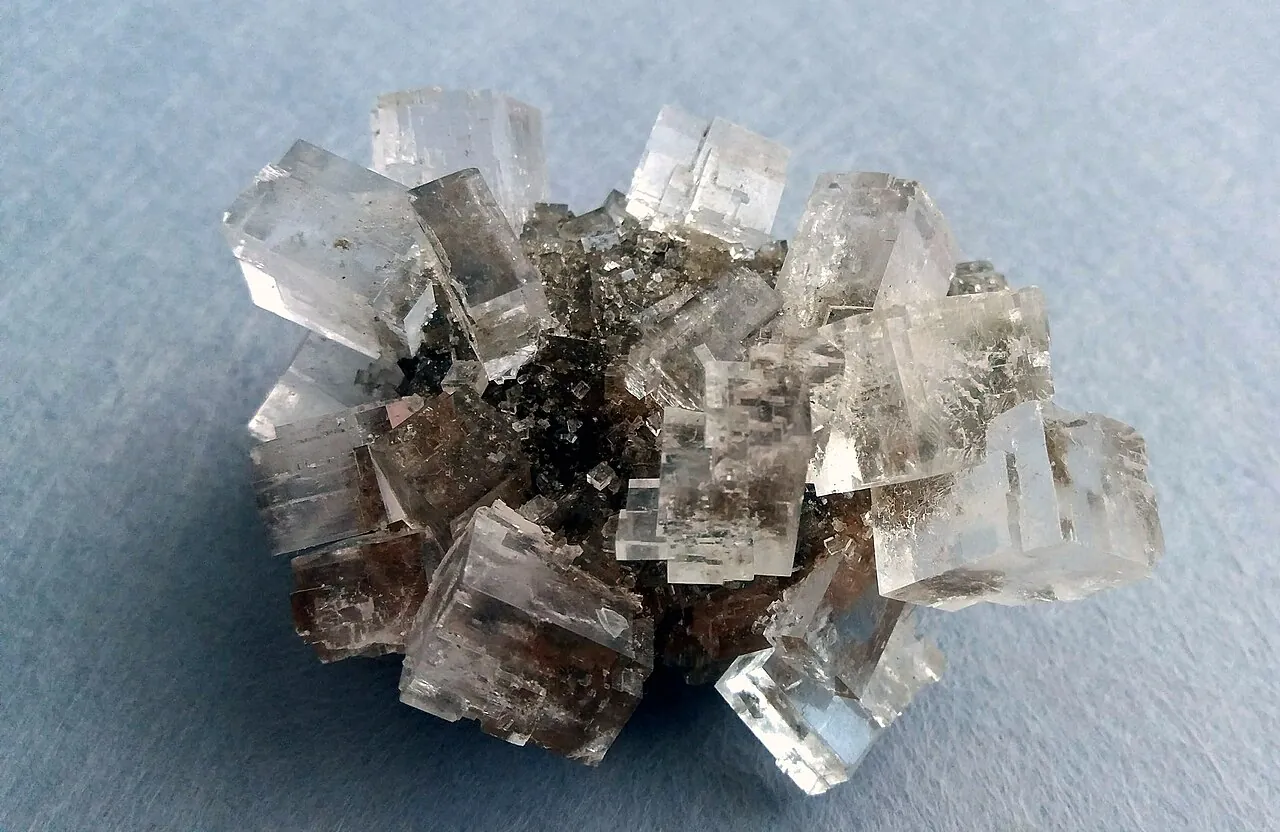
    Clear cubic halite (salt) crystals on rock
    Clear cubic halite (salt) crystals on rock. See credits.

    lattice

    noun
    /ˈlætɪs/  LAT-iss

    The repeating, three-dimensional pattern in which the atoms or ions inside a crystal are arranged.

    “Table salt forms little cubes because its atoms sit in a cubic lattice.”

    Word family / collocations: crystal lattice; lattice structure; a regular lattice

    晶格
    Set 1

    unit cell

    noun
    /ˈjuːnɪt sɛl/  YOO-nit sell

    The smallest block of a lattice that, when copied over and over in every direction, builds the whole crystal.

    “The simplest unit cell is a cube with one atom at each corner.”

    Word family / collocations: cubic unit cell; unit cell dimensions; repeat the unit cell

    晶胞
    Set 1

    nucleation

    noun
    /ˌnuːkliˈeɪʃən/  noo-klee-AY-shun

    The first step of crystal growth, when a few particles clump together into a tiny seed that is stable enough to keep growing.

    “A speck of dust in the solution can trigger nucleation.”

    Word family / collocations: nucleate (verb); nucleus (noun); nucleation site

    成核(晶核形成)
    Set 1

    supersaturation

    noun
    /ˌsuːpərˌsætʃəˈreɪʃən/  soo-per-SATCH-uh-RAY-shun

    The state of a solution that holds more dissolved material than it normally could at that temperature. It is unstable, so crystals tend to appear.

    “Cooling the hot solution creates supersaturation, so crystals start to grow.”

    Word family / collocations: supersaturated solution; saturated (adjective); saturate (verb)

    过饱和
    Set 1

    habit

    noun
    /ˈhæbɪt/  HAB-it

    The typical overall shape that a crystal takes as it grows.

    “Quartz usually has a prismatic habit, like a six-sided pencil with a point.”

    Word family / collocations: crystal habit; prismatic, tabular or needle-like habit

    晶习(晶体常见形态)
    Set 1

    twinning

    noun
    /ˈtwɪnɪŋ/  TWIN-ing

    The growth of two or more crystals joined together in a regular, symmetrical way, as if one were a mirror image of the other.

    “Twinning gives the mineral staurolite its famous cross shape.”

    Word family / collocations: twin (noun, verb); twinned crystal; contact twin

    孪晶(双晶)
    Set 1

    polymorph

    noun
    /ˈpɑːlimɔːrf/  POL-ee-morf

    One of two or more minerals that have the same chemical formula but different crystal structures.

    “Diamond is a polymorph of carbon, and so is graphite.”

    Word family / collocations: polymorphic (adjective); polymorphism; polymorph of calcite

    同质多象变体
    Set 1

    symmetry

    noun
    /ˈsɪmətri/  SIM-uh-tree

    A balanced, regular pattern. A crystal has symmetry if it looks the same after being rotated or reflected.

    “A snowflake has six-fold symmetry: turn it by 60 degrees and it looks the same.”

    Word family / collocations: axis of symmetry; rotational symmetry; symmetrical (adjective)

    对称
    Set 1

    facet

    noun
    /ˈfæsɪt/  FASS-it

    One flat, smooth surface (a face) on a crystal or on a cut gem.

    “Light flashes from every facet as you turn the crystal.”

    Word family / collocations: crystal face; faceted gem; multi-faceted

    晶面;刻面
    Set 1

    amorphous

    adjective
    /əˈmɔːrfəs/  uh-MOR-fus

    Having no regular internal pattern of atoms, so not crystalline.

    “Glass is amorphous, which is why it has no natural crystal faces.”

    Word family / collocations: amorphous solid; amorphous silica; crystalline (opposite)

    非晶质的
    Set 1

    Quiz yourself: Set 1

    6 questions: 3 multiple choice and 3 typed. Score 5 or more to earn 5 points.

    2Detective ToolsIdentifying minerals 矿物鉴定0 / 10 learned
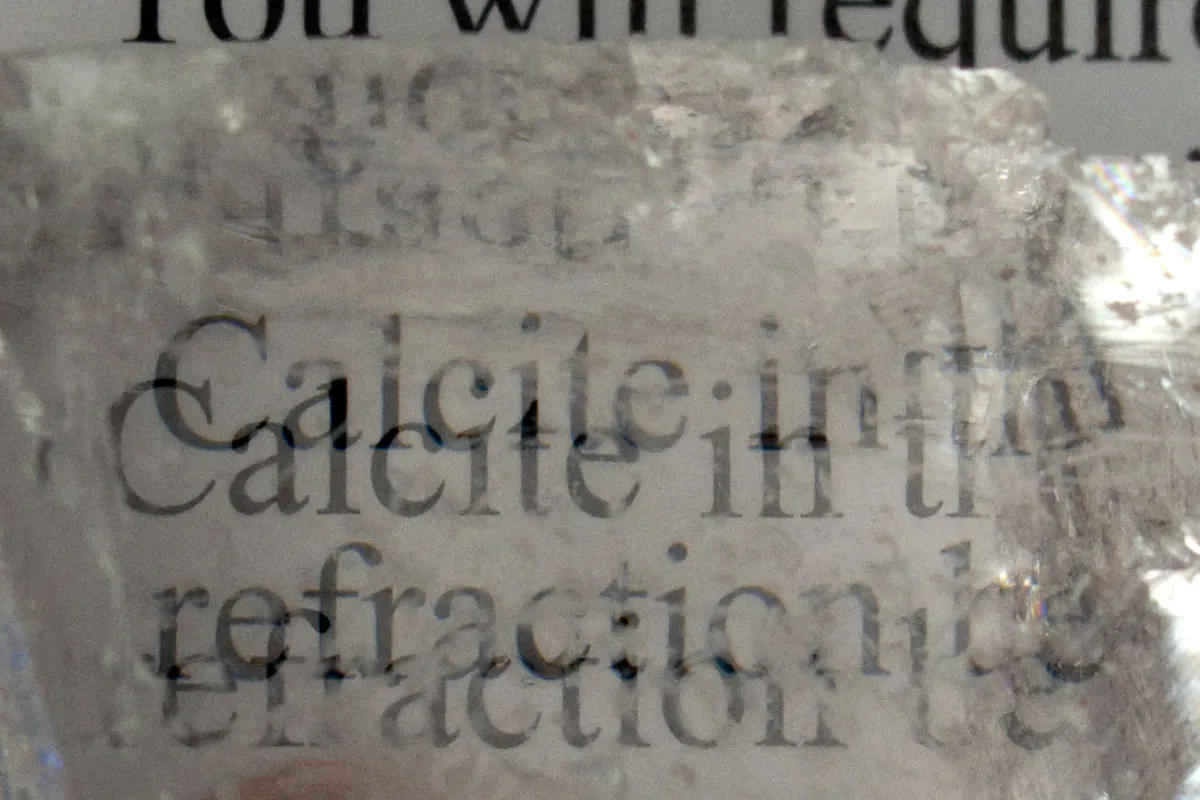
    Printed text seen double through a clear calcite crystal because of birefringence
    Printed text seen double through a clear calcite crystal because of birefringence. See credits.

    luster

    noun
    /ˈlʌstər/  LUS-ter

    The way light reflects from the surface of a mineral, for example metallic, glassy, silky or dull.

    “Pyrite has a metallic luster, but quartz has a glassy luster.”

    Word family / collocations: metallic luster; vitreous (glassy) luster; lustrous (adjective)

    光泽
    Set 2

    hardness

    noun
    /ˈhɑːrdnəs/  HARD-nus

    How well a mineral resists being scratched. Geologists measure it with the Mohs scale.

    “Quartz has a hardness of 7, so a steel knife cannot scratch it.”

    Word family / collocations: Mohs hardness; test the hardness; hard, harder, hardest

    硬度
    Set 2

    Mohs scale

    noun
    /ˈmoʊz skeɪl/  MOHZ skayl

    A ranking from 1 to 10 of minerals by which one can scratch which, from talc (1) to diamond (10).

    “On the Mohs scale, fluorite (4) can scratch calcite (3) but not quartz (7).”

    Word family / collocations: Mohs hardness; scratch test; named after Friedrich Mohs

    莫氏硬度表
    Set 2

    cleavage

    noun
    /ˈkliːvɪdʒ/  KLEE-vij

    The tendency of a mineral to break along flat, smooth planes because its atomic bonds are weaker in those directions.

    “Calcite has perfect cleavage, so it splits into small slanted blocks.”

    Word family / collocations: perfect, good or poor cleavage; cleavage plane; cleave (verb)

    解理
    Set 2

    fracture

    noun
    /ˈfræktʃər/  FRAK-cher

    The way a mineral breaks when it does not split along cleavage planes. A curved, shell-like break is called conchoidal.

    “Quartz has no cleavage, so it breaks with a curved, conchoidal fracture.”

    Word family / collocations: conchoidal fracture; uneven fracture; fracture (verb)

    断口
    Set 2

    streak

    noun
    /striːk/  STREEK

    The color of a mineral's powder when it is rubbed on an unglazed white tile. It is often more reliable than the color of the crystal.

    “Hematite can look silver or black, but its streak is always reddish-brown.”

    Word family / collocations: streak plate; streak test; streak color

    条痕
    Set 2

    specific gravity

    noun
    /spəˈsɪfɪk ˈɡrævəti/  spuh-SIF-ik GRAV-uh-tee

    The density of a material divided by the density of water. It has no units and shows how heavy a mineral feels for its size.

    “Quartz has a specific gravity of about 2.65, so it weighs 2.65 times as much as the same volume of water.”

    Word family / collocations: relative density; heavy for its size; measure the specific gravity

    比重(相对密度)
    Set 2

    refraction

    noun
    /rɪˈfrækʃən/  rih-FRAK-shun

    The bending of light when it passes from one material into another, such as from air into a crystal.

    “Diamond bends light so strongly that refraction makes it sparkle.”

    Word family / collocations: refractive index; refract (verb); angle of refraction

    折射
    Set 2

    birefringence

    noun
    /ˌbaɪrɪˈfrɪndʒəns/  BY-rih-FRIN-jens

    The splitting of one ray of light into two rays that travel at different speeds inside certain crystals.

    “Through a clear piece of calcite, a line of writing looks doubled because of birefringence.”

    Word family / collocations: birefringent (adjective); double refraction; Iceland spar

    双折射
    Set 2

    translucent

    adjective
    /trænsˈluːsənt/  tranz-LOO-sunt

    Letting some light pass through, but scattering it so that you cannot see a clear picture through the material.

    “Milky quartz is translucent, like frosted glass.”

    Word family / collocations: transparent, translucent, opaque; translucency

    半透明的
    Set 2

    Quiz yourself: Set 2

    6 questions: 3 multiple choice and 3 typed. Score 5 or more to earn 5 points.

    3Chemistry and ColorWhat minerals are made of 成分与颜色0 / 10 learned
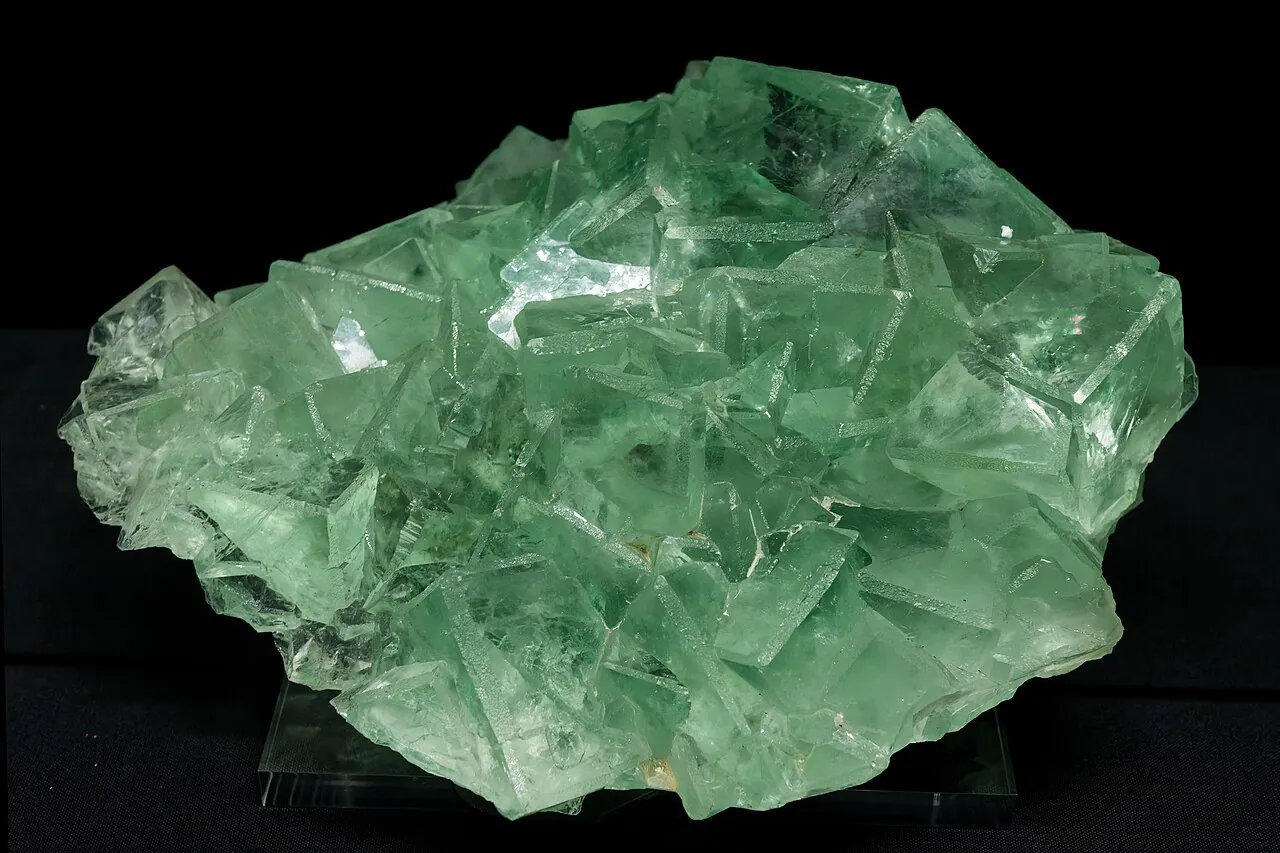
    A group of green fluorite crystals from Xianghuapu, Hunan, China
    A group of green fluorite crystals from Xianghuapu, Hunan, China. See credits.

    mineral

    noun
    /ˈmɪnərəl/  MIN-er-ul

    A naturally occurring, solid, non-living substance with a definite chemical makeup and an orderly crystal structure.

    “Quartz is a mineral, but steel is not, because people make steel.”

    Word family / collocations: mineral species; mineralogy; mineralogist

    矿物
    Set 3

    silicate

    noun
    /ˈsɪlɪkeɪt/  SIL-ih-kayt

    A mineral built from silicon and oxygen, usually combined with other elements. Silicates are the most common minerals in Earth's crust.

    “Quartz is a silicate, and so are feldspar and mica.”

    Word family / collocations: silicate mineral; silica; silicon

    硅酸盐
    Set 3

    carbonate

    noun
    /ˈkɑːrbəneɪt/  KAR-buh-nayt

    A mineral that contains carbon and oxygen bonded together as the carbonate group.

    “Calcite is a carbonate, and it fizzes in weak acid.”

    Word family / collocations: calcium carbonate; carbonate rock; limestone

    碳酸盐
    Set 3

    sulfide

    noun
    /ˈsʌlfaɪd/  SUL-fide

    A mineral in which a metal is combined with sulfur. Many sulfides are important metal ores.

    “Pyrite, nicknamed fool's gold, is an iron sulfide.”

    Word family / collocations: sulfide ore; sulfide mineral; sulfur

    硫化物
    Set 3

    oxide

    noun
    /ˈɑːksaɪd/  OK-side

    A mineral in which a metal is combined with oxygen.

    “Hematite is an iron oxide, and corundum, which includes ruby and sapphire, is aluminum oxide.”

    Word family / collocations: iron oxide; oxidize (verb); oxidation

    氧化物
    Set 3

    native element

    noun
    /ˈneɪtɪv ˈɛləmənt/  NAY-tiv EL-uh-ment

    An element that is found in nature in its pure form, not combined with other elements.

    “Gold is a native element, and so are copper, sulfur and diamond (pure carbon).”

    Word family / collocations: native gold; native copper; element

    自然元素
    Set 3

    impurity

    noun
    /ɪmˈpjʊrəti/  im-PYOOR-uh-tee

    A tiny amount of foreign atoms inside a crystal. Impurities often change a crystal's color.

    “A little chromium as an impurity makes corundum red, and then we call it ruby.”

    Word family / collocations: trace impurities; pure, impure; purity

    杂质
    Set 3

    trace element

    noun
    /treɪs ˈɛləmənt/  TRAYSS EL-uh-ment

    An element that is present in only very small amounts in a mineral, often much less than one percent.

    “Iron, present as a trace element, helps give amethyst its purple color.”

    Word family / collocations: trace amounts; trace chemistry; trace (verb)

    微量元素
    Set 3

    inclusion

    noun
    /ɪnˈkluːʒən/  in-KLOO-zhun

    A bit of another mineral, a liquid or a gas that was trapped inside a crystal while it was growing.

    “The thin golden needle of rutile inside the quartz is an inclusion.”

    Word family / collocations: fluid inclusion; mineral inclusion; include (verb)

    包裹体
    Set 3

    fluorescence

    noun
    /flʊˈrɛsəns/  floo-RES-ens

    The glow that some minerals give off while ultraviolet light shines on them. It stops when the light is switched off.

    “Under UV light, some fluorite glows blue, and the word fluorescence comes from fluorite.”

    Word family / collocations: fluorescent (adjective); ultraviolet (UV) light; phosphorescence

    荧光
    Set 3

    Quiz yourself: Set 3

    6 questions: 3 multiple choice and 3 typed. Score 5 or more to earn 5 points.

    4Where Crystals FormThe geology of crystal homes 晶体在哪里形成0 / 10 learned
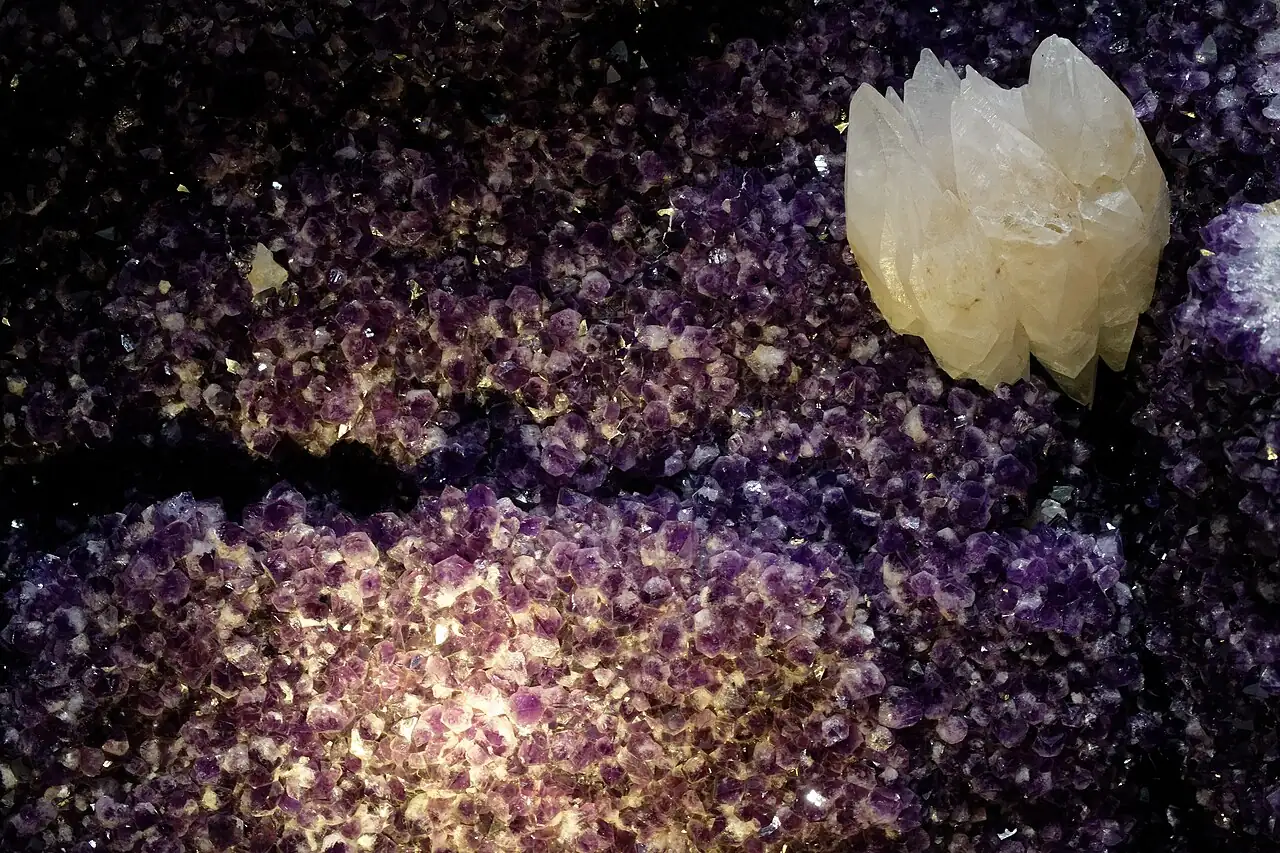
    The inside of an amethyst geode lined with purple crystals and a white crystal in front
    The inside of an amethyst geode lined with purple crystals and a white crystal in front. See credits.

    magma

    noun
    /ˈmæɡmə/  MAG-muh

    Hot, molten rock under Earth's surface. It holds dissolved gases and sometimes small crystals.

    “When magma cools slowly underground, large crystals can grow.”

    Word family / collocations: magma chamber; magma cools; lava (magma that erupts)

    岩浆
    Set 4

    igneous

    adjective
    /ˈɪɡniəs/  IG-nee-us

    Describes rock that formed when magma or lava cooled and hardened.

    “Granite is an igneous rock, and you can see its quartz and feldspar crystals.”

    Word family / collocations: igneous rock; intrusive and extrusive igneous rocks

    火成的
    Set 4

    metamorphic

    adjective
    /ˌmɛtəˈmɔːrfɪk/  met-uh-MOR-fik

    Describes rock that was changed by heat and pressure deep underground, without melting completely.

    “Limestone turns into marble, a metamorphic rock, when it is heated and squeezed.”

    Word family / collocations: metamorphic rock; metamorphism; metamorphose (verb)

    变质的
    Set 4

    sedimentary

    adjective
    /ˌsɛdɪˈmɛntəri/  sed-ih-MEN-tuh-ree

    Describes rock made from layers of sand, mud, shells or dissolved minerals that were pressed together over a long time.

    “The Herkimer crystals grew in a sedimentary rock called dolostone.”

    Word family / collocations: sedimentary rock; sediment; layers (strata)

    沉积的
    Set 4

    pegmatite

    noun
    /ˈpɛɡmətaɪt/  PEG-muh-tite

    A very coarse-grained igneous rock with huge crystals, formed from the last, water-rich part of a cooling magma.

    “A pegmatite is famous for big crystals of tourmaline, topaz and mica.”

    Word family / collocations: pegmatite dike; granite pegmatite; gem pegmatite

    伟晶岩
    Set 4

    hydrothermal vein

    noun
    /ˌhaɪdrəˈθɜːrməl veɪn/  HY-dro-THER-mul VAYN

    A crack in rock that was filled with minerals which crystallized from hot, mineral-rich water.

    “Many quartz crystals in Arkansas grew in a hydrothermal vein.”

    Word family / collocations: hydrothermal fluid; quartz vein; vein (noun)

    热液脉
    Set 4

    geode

    noun
    /ˈdʒiːoʊd/  JEE-ohd

    A roughly round rock with a hollow center that is lined with crystals.

    “We cracked open the geode and found a sparkling cave of purple amethyst.”

    Word family / collocations: amethyst geode; crack open a geode

    晶腺(晶洞)
    Set 4

    vug

    noun
    /vʌɡ/  VUG

    A small cavity in a rock, often lined with crystals.

    “The miner split the dolostone and found a vug full of clear quartz crystals.”

    Word family / collocations: vuggy (adjective); a vug lined with crystals; cavity

    岩石中的空洞(晶洞)
    Set 4

    druse

    noun
    /druːz/  DROOZ

    A crust of tiny crystals covering a rock surface or the inside of a cavity.

    “The inside of the geode was a glittering druse of quartz.”

    Word family / collocations: drusy quartz; druzy (jewelry spelling); crystal crust

    晶簇(细小晶体形成的晶壳)
    Set 4

    evaporite

    noun
    /ɪˈvæpəraɪt/  ih-VAP-uh-rite

    A mineral or rock left behind when salty water evaporates.

    “Halite, or rock salt, is an evaporite, and so is gypsum.”

    Word family / collocations: evaporite deposit; evaporate (verb); evaporation

    蒸发岩
    Set 4

    Quiz yourself: Set 4

    6 questions: 3 multiple choice and 3 typed. Score 5 or more to earn 5 points.

    5Earth in MotionProcesses that build and uncover crystals 地球的运动0 / 10 learned
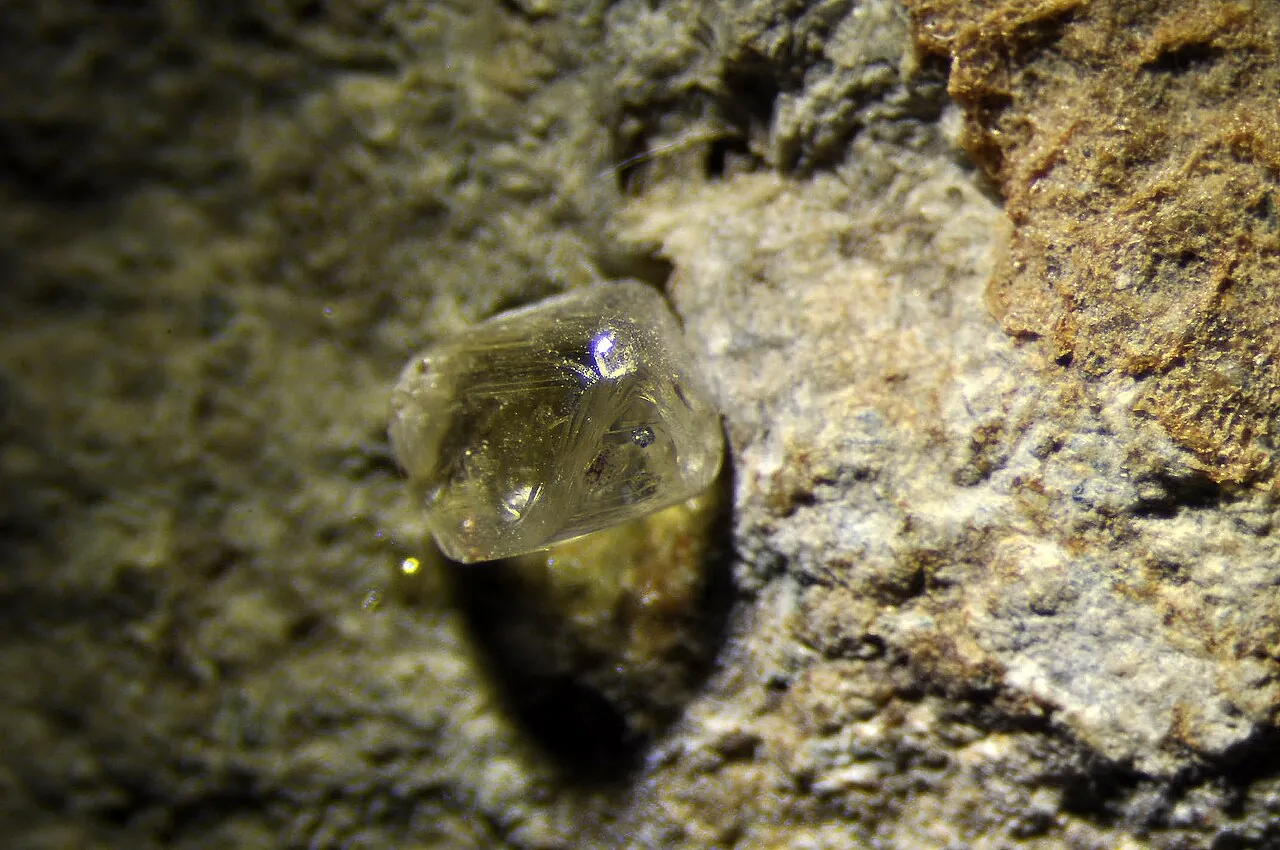
    A diamond crystal embedded in dark kimberlite rock
    A diamond crystal embedded in dark kimberlite rock. See credits.

    kimberlite

    noun
    /ˈkɪmbərlaɪt/  KIM-ber-lite

    A rock from explosive volcanic eruptions that carries diamonds up from deep inside Earth. It is found in carrot-shaped pipes.

    “Most diamond mines follow a pipe of kimberlite down into the ground.”

    Word family / collocations: kimberlite pipe; named after Kimberley, South Africa

    金伯利岩
    Set 5

    crust

    noun
    /krʌst/  KRUST

    The thin, solid outer layer of Earth, made of rock.

    “The crust is roughly 30 to 50 kilometers thick under the continents.”

    Word family / collocations: Earth's crust; continental crust; oceanic crust

    地壳
    Set 5

    mantle

    noun
    /ˈmæntəl/  MAN-tul

    The thick layer of hot, slowly flowing rock between Earth's crust and its core.

    “Natural diamonds form deep in the mantle, at least 150 kilometers down.”

    Word family / collocations: upper mantle; mantle rock; mantle plume

    地幔
    Set 5

    plate tectonics

    noun
    /pleɪt tɛkˈtɑːnɪks/  PLAYT tek-TON-iks

    The theory that Earth's outer shell is broken into giant plates that move slowly, building mountains and causing earthquakes.

    “Plate tectonics lifted the Alps when the African and European plates collided.”

    Word family / collocations: tectonic plate; plate boundary; collision

    板块构造
    Set 5

    weathering

    noun
    /ˈwɛðərɪŋ/  WETH-er-ing

    The slow breakdown of rock at Earth's surface by rain, wind, ice and chemicals.

    “Weathering slowly freed the quartz crystals from the crumbling rock.”

    Word family / collocations: chemical weathering; physical weathering; weathered rock

    风化
    Set 5

    erosion

    noun
    /ɪˈroʊʒən/  ih-ROH-zhun

    The movement of weathered rock and soil by water, wind or ice.

    “Erosion exposed the pegmatite on the side of the hill.”

    Word family / collocations: soil erosion; erode (verb); river erosion

    侵蚀
    Set 5

    ore

    noun
    /ɔːr/  OR

    Rock that contains enough of a valuable metal or mineral that it is worth mining.

    “Wolframite is an ore of tungsten.”

    Word family / collocations: iron ore; ore body; smelt the ore

    矿石
    Set 5

    deposit

    noun
    /dɪˈpɑːzɪt/  dih-POZ-it

    A natural concentration of a mineral or ore in one place.

    “The mine sits on a rich diamond deposit.”

    Word family / collocations: mineral deposit; ore deposit; deposit (verb): to lay down

    矿床
    Set 5

    fissure

    noun
    /ˈfɪʃər/  FISH-er

    A long, narrow crack in rock.

    “In the Alps, quartz crystals grew inside a fissure opened up by mountain building.”

    Word family / collocations: alpine fissure; fissure vein; fissured rock

    裂隙
    Set 5

    host rock

    noun
    /hoʊst rɑːk/  HOHST ROK

    The rock that surrounds and contains a vein, cavity or ore deposit.

    “The host rock at Herkimer is a Cambrian dolostone.”

    Word family / collocations: host rock; surrounding rock; country rock

    围岩(主岩)
    Set 5

    Quiz yourself: Set 5

    6 questions: 3 multiple choice and 3 typed. Score 5 or more to earn 5 points.

    6Gems and ValueFrom rough crystal to jewel 宝石与价值0 / 10 learned
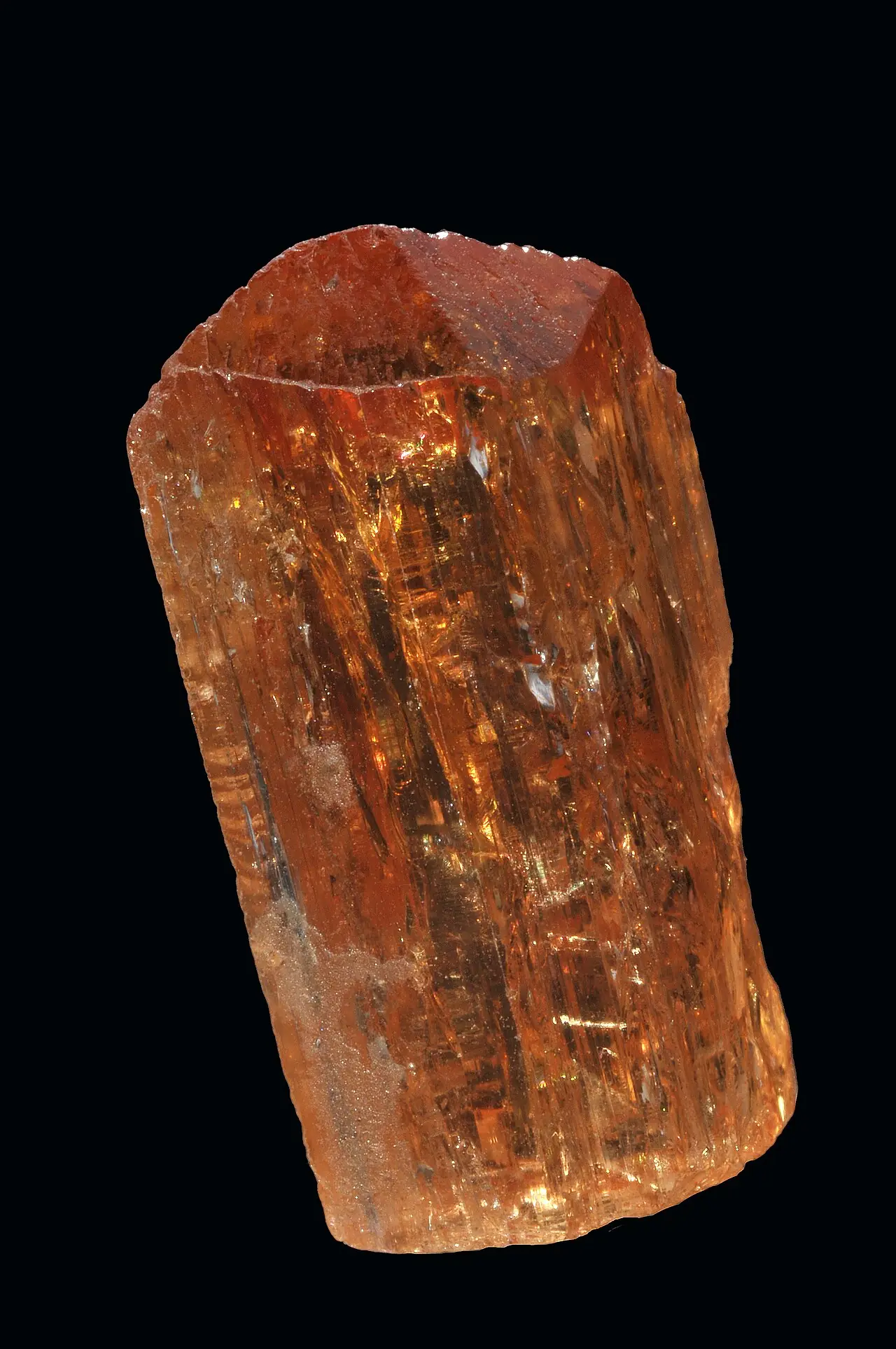
    A single orange-pink imperial topaz crystal from Ouro Preto, Brazil
    A single orange-pink imperial topaz crystal from Ouro Preto, Brazil. See credits.

    gemstone

    noun
    /ˈdʒɛmstoʊn/  JEM-stohn

    A mineral, or sometimes a rock or organic material, that is cut and polished for jewelry because it is beautiful, durable and rare.

    “Ruby is a gemstone, and its mineral name is corundum.”

    Word family / collocations: precious gemstone; gem-quality; semi-precious

    宝石
    Set 6

    carat

    noun
    /ˈkærət/  KAIR-ut

    A unit of mass for gemstones. One carat equals 0.2 grams.

    “One carat is just 0.2 grams, so a ten-carat diamond weighs only two grams.”

    Word family / collocations: carat weight; a two-carat diamond; not the same as karat (gold purity)

    克拉
    Set 6

    clarity

    noun
    /ˈklærəti/  KLAIR-uh-tee

    How free a gem is from inclusions and surface flaws.

    “A gem with no visible inclusions has high clarity.”

    Word family / collocations: clarity grade; flawless; clear (adjective)

    净度
    Set 6

    cabochon

    noun
    /ˈkæbəʃɑːn/  KAB-uh-shon

    A gem that is polished into a smooth, rounded dome instead of being cut with facets.

    “An opal is often cut as a cabochon to show off its colors.”

    Word family / collocations: cabochon cut; domed; polished

    弧面型宝石
    Set 6

    rough

    adjective
    /rʌf/  RUFF

    Natural and uncut; not yet shaped or polished. Gem dealers also use it as a noun.

    “He bought a piece of rough ruby and had it cut into a gem.”

    Word family / collocations: rough diamond; rough stone; polished (opposite)

    未加工的(原石)
    Set 6

    lapidary

    noun
    /ˈlæpɪdɛri/  LAP-ih-dair-ee

    The craft of cutting and polishing stones, or a person who does this work.

    “A skilled lapidary turned the rough tourmaline into a glowing gem.”

    Word family / collocations: lapidary workshop; lapidary artist; lapidary wheel

    宝石切磨工艺(工匠)
    Set 6

    synthetic

    adjective
    /sɪnˈθɛtɪk/  sin-THET-ik

    Made by people in a lab or factory, but with the same chemistry and structure as the natural mineral.

    “Synthetic quartz is grown in factories and used in watches and electronics.”

    Word family / collocations: synthetic gem; lab-grown; natural versus synthetic

    合成的
    Set 6

    specimen

    noun
    /ˈspɛsɪmən/  SPES-ih-men

    A sample of a mineral that is kept for study, display or collecting.

    “The museum's best azurite specimen came from Tsumeb.”

    Word family / collocations: mineral specimen; museum-quality specimen; collect a specimen

    标本
    Set 6

    provenance

    noun
    /ˈprɑːvənəns/  PROV-uh-nunce

    The record of where a specimen or gem came from and who has owned it.

    “A crystal with clear provenance is worth more to collectors.”

    Word family / collocations: trace the provenance; provenance records; origin

    来源与流转记录
    Set 6

    heat treatment

    noun
    /hiːt ˈtriːtmənt/  HEET TREET-ment

    Heating a gem to improve its color or clarity.

    “Many sapphires on the market have had heat treatment.”

    Word family / collocations: heat-treated stone; untreated (natural); enhancement

    热处理
    Set 6

    Quiz yourself: Set 6

    6 questions: 3 multiple choice and 3 typed. Score 5 or more to earn 5 points.

    7Field Gear and MethodsHow collectors work outdoors 野外装备与方法0 / 10 learned
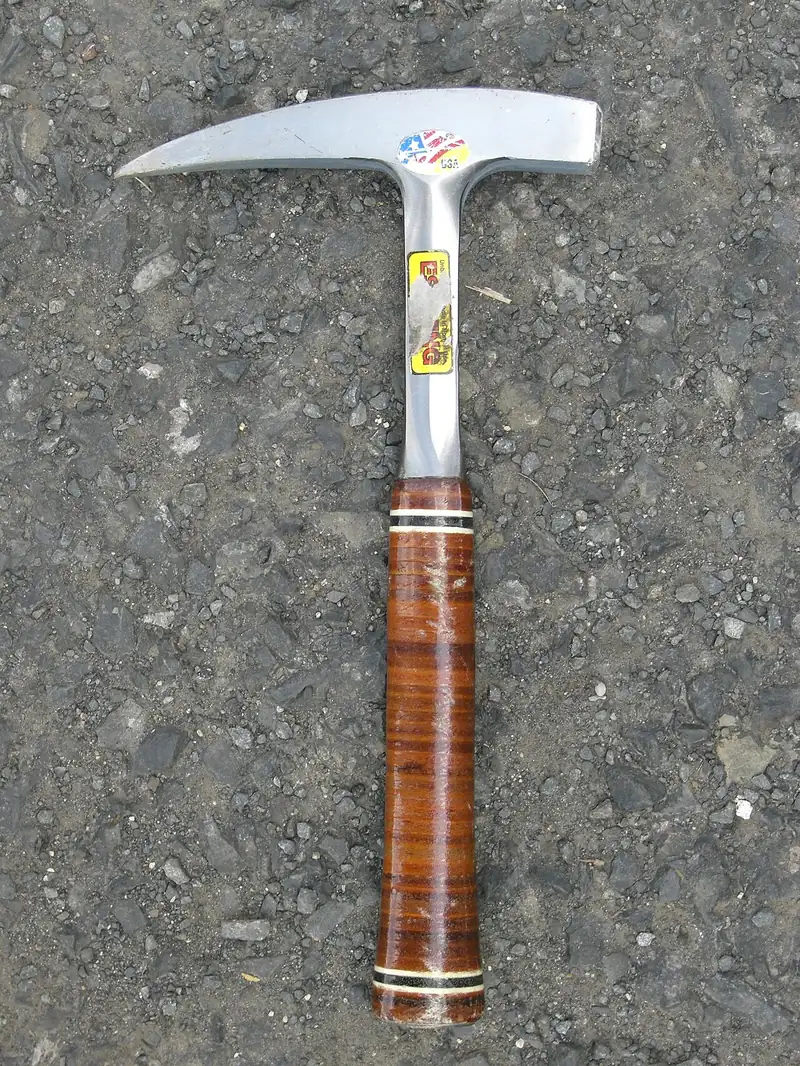
    A geologist's rock hammer with a wooden handle
    A geologist's rock hammer with a wooden handle. See credits.

    rock hammer

    noun
    /rɑːk ˈhæmər/  ROK HAM-er

    A hammer with a flat face on one side and a pick or chisel tip on the other, used for breaking rock.

    “Always wear safety glasses when you swing a rock hammer.”

    Word family / collocations: geologist's hammer; hammer and chisel; swing a hammer

    地质锤
    Set 7

    chisel

    noun
    /ˈtʃɪzəl/  CHIZ-ul

    A metal tool with a sharp, flat edge that you tap with a hammer to split rock along a crack.

    “Tap the chisel gently along the seam.”

    Word family / collocations: cold chisel; hammer and chisel; chisel away

    凿子
    Set 7

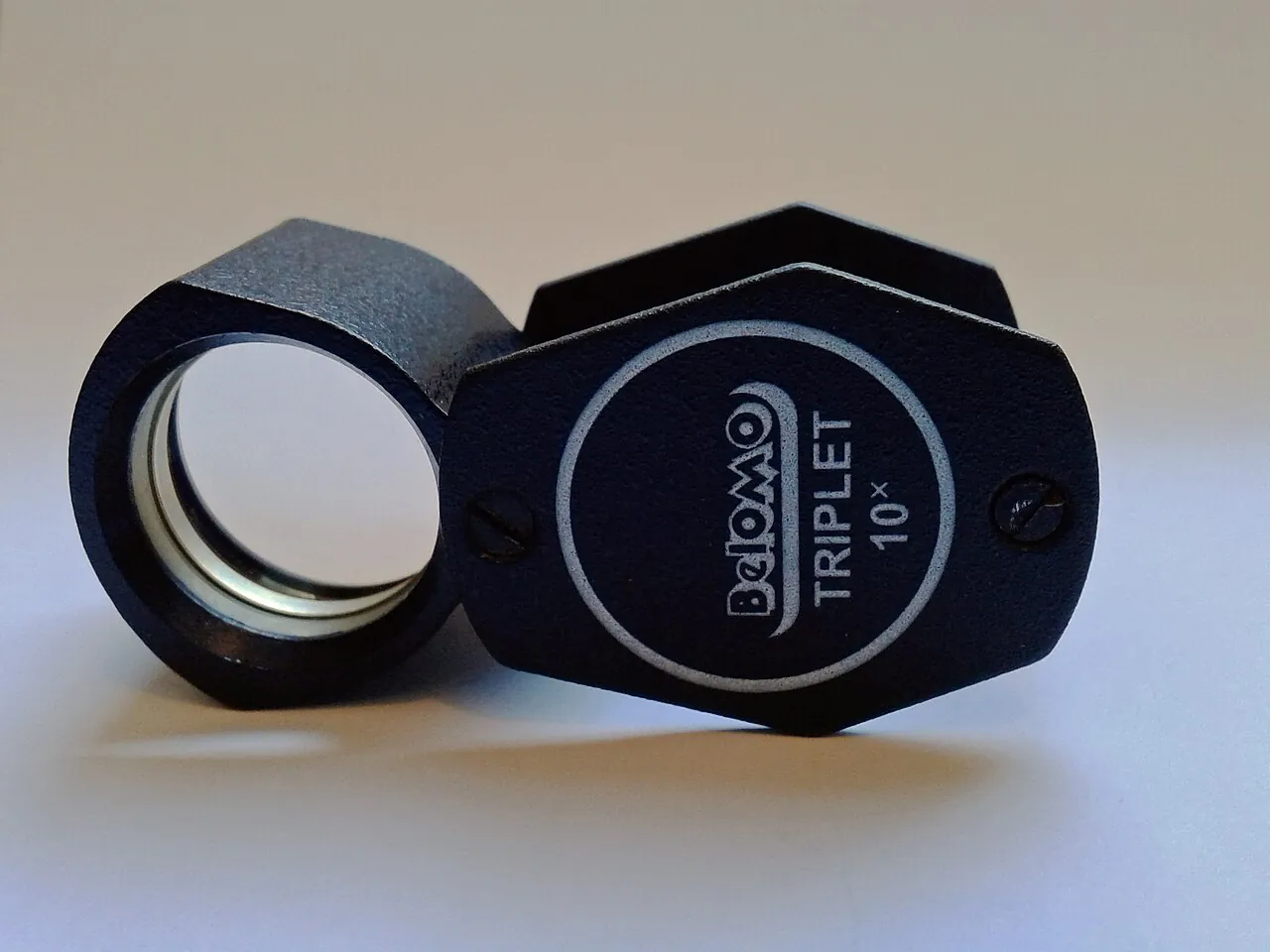
    loupe

    noun
    /luːp/  LOOP

    A small magnifying lens, often 10 times magnification, used to study crystals closely.

    “Through the loupe, I could see tiny inclusions inside the crystal.”

    Word family / collocations: 10x loupe; hand lens; jeweler's loupe

    放大镜(珠宝放大镜)
    Set 7

    prospecting

    noun
    /ˈprɑːspɛktɪŋ/  PROS-pek-ting

    Searching an area for useful minerals, metals or gems.

    “While prospecting in the creek, she found quartz pebbles that led her up the hill.”

    Word family / collocations: prospector; prospect (verb); go prospecting

    找矿(勘探)
    Set 7

    outcrop

    noun
    /ˈaʊtkrɑːp/  OWT-krop

    A place where bedrock sticks out above the soil so that geologists can see and study it.

    “We studied the pegmatite outcrop beside the road.”

    Word family / collocations: rock outcrop; exposed outcrop; crop out (verb)

    露头
    Set 7

    float

    noun
    /floʊt/  FLOHT

    Loose pieces of rock or crystal that have broken off bedrock and lie on the ground, away from where they came from.

    “Finding quartz float told us to search uphill for the vein.”

    Word family / collocations: follow the float; float trail; float (verb)

    转石(浮石)
    Set 7

    tailings

    noun
    /ˈteɪlɪŋz/  TAY-lingz

    The leftover rock and waste dumped after the valuable minerals have been taken out of ore.

    “Visitors often hunt for crystals in the mine's tailings.”

    Word family / collocations: tailings pile; tailings dump; sort through tailings

    尾矿
    Set 7

    claim

    noun
    /kleɪm/  KLAYM

    A piece of land where a person or company has the legal right to mine minerals.

    “Do not dig on a mining claim without the owner's permission.”

    Word family / collocations: mining claim; stake a claim; claim owner

    采矿权地块
    Set 7

    permit

    noun
    /ˈpɜːrmɪt/  PER-mit

    An official written permission to collect, dig or enter an area.

    “In some protected areas you need a permit before you can collect even one stone.”

    Word family / collocations: collecting permit; apply for a permit; permit (verb, pur-MIT)

    许可证
    Set 7

    locality

    noun
    /loʊˈkæləti/  loh-KAL-uh-tee

    The exact place where a mineral specimen was found.

    “Always write the locality on the label of your specimen.”

    Word family / collocations: type locality; locality data; local (adjective)

    产地
    Set 7

    Quiz yourself: Set 7

    6 questions: 3 multiple choice and 3 typed. Score 5 or more to earn 5 points.

    8Mining and DiggingHow crystals come out of the ground 采矿与挖掘0 / 10 learned
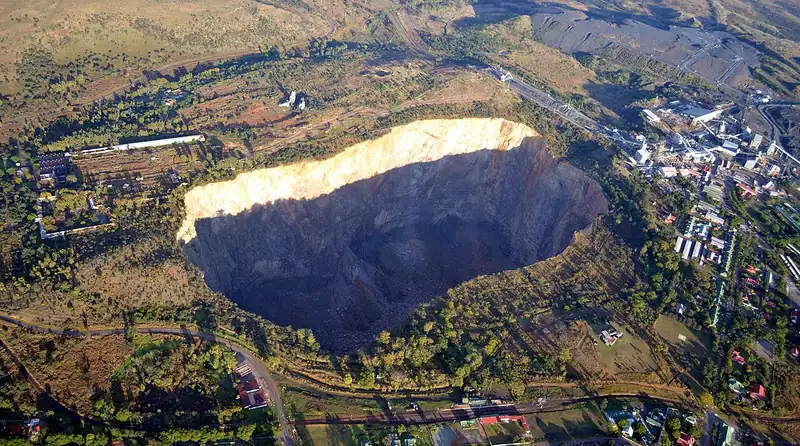
    Aerial view of the Cullinan diamond mine open pit in South Africa
    Aerial view of the Cullinan diamond mine open pit in South Africa. See credits.

    quarry

    noun
    /ˈkwɔːri/  KWOR-ee

    An open pit where stone is cut or blasted out of the ground.

    “The crystals were found in a limestone quarry.”

    Word family / collocations: stone quarry; quarry face; quarry (verb)

    采石场
    Set 8

    shaft

    noun
    /ʃæft/  SHAFT

    A vertical or steeply sloping tunnel in a mine.

    “A lift carried the miners down the shaft.”

    Word family / collocations: mine shaft; sink a shaft; ventilation shaft

    竖井
    Set 8

    adit

    noun
    /ˈædɪt/  AD-it

    A horizontal tunnel that enters a mine from the side of a hill.

    “The old adit was sealed to keep hikers out.”

    Word family / collocations: abandoned adit; adit entrance; drive an adit

    平硐
    Set 8

    pocket

    noun
    /ˈpɑːkɪt/  POK-it

    A cavity in a vein or rock that is filled with crystals. Collectors use this word for a crystal-filled cavity.

    “The crew hit a pocket of tourmaline crystals.”

    Word family / collocations: crystal pocket; strike a pocket; gem pocket

    晶囊(含晶体的空洞)
    Set 8

    overburden

    noun
    /ˈoʊvərbɜːrdn/  OH-ver-BUR-dn

    The soil and rock that lie on top of a mineral deposit and must be removed to reach it.

    “Miners strip the overburden before they reach the pegmatite.”

    Word family / collocations: remove the overburden; overburden removal; burden

    覆盖层(剥离层)
    Set 8

    blasting

    noun
    /ˈblæstɪŋ/  BLAST-ing

    Using explosives to break rock. Only trained professionals do this.

    “Blasting can shatter crystals, so careful miners switch to hand tools near a pocket.”

    Word family / collocations: blast (verb, noun); blasting crew; controlled blast

    爆破
    Set 8

    placer

    noun
    /ˈplæsər/  PLASS-er

    A deposit of heavy, valuable minerals such as gold or gems that moving water has concentrated in sand and gravel.

    “Rubies and gold can collect in a river placer.”

    Word family / collocations: placer deposit; placer mining; placer gold

    砂矿
    Set 8

    alluvial

    adjective
    /əˈluːviəl/  uh-LOO-vee-ul

    Carried and left behind by flowing water, such as river sand and gravel.

    “Rubies near Mogok are mined from alluvial gravel.”

    Word family / collocations: alluvial gravel; alluvial fan; alluvium

    冲积的
    Set 8

    screening

    noun
    /ˈskriːnɪŋ/  SKREE-ning

    Shaking or washing material through a mesh to separate big pieces from small ones.

    “Screening the gravel in water makes the sparkly crystals easy to spot.”

    Word family / collocations: screen (noun, verb); wet screening; sieve

    筛选
    Set 8

    sluice

    noun
    /sluːs/  SLOOSS

    A sloping water channel used to wash gravel so that heavier minerals settle and lighter mud washes away.

    “A sluice uses flowing water to carry mud away and leave heavy crystals behind.”

    Word family / collocations: sluice box; sluice gate; sluicing

    溜槽(洗矿槽)
    Set 8

    Quiz yourself: Set 8

    6 questions: 3 multiple choice and 3 typed. Score 5 or more to earn 5 points.

    9Safety and EthicsCollect like a professional 安全与道德0 / 10 learned
    A black 10x jeweler's loupe (small magnifying lens)
    A black 10x jeweler's loupe (small magnifying lens). See credits.

    leave no trace

    phrase
    /liːv noʊ treɪs/  LEEV NOH TRAYSS

    The rule to leave a place exactly as you found it: take your trash home and avoid damaging the land.

    “Fill in any hole you dig, and leave no trace.”

    Word family / collocations: Leave No Trace principles; leave nothing behind; trace (noun)

    无痕(不留痕迹)原则
    Set 9

    responsible collecting

    phrase
    /rɪˈspɑːnsəbəl kəˈlɛktɪŋ/  rih-SPON-suh-bul kuh-LEK-ting

    Collecting with permission, following the rules, taking only a few specimens and recording where they came from so that sites last for others.

    “Responsible collecting means asking permission and taking only what you can study and care for.”

    Word family / collocations: responsible collector; collect responsibly; code of ethics

    负责任的采集
    Set 9

    hazard

    noun
    /ˈhæzərd/  HAZ-erd

    Something that could cause harm or injury.

    “Loose rock above you is a serious hazard.”

    Word family / collocations: safety hazard; hazardous (adjective); natural hazard

    危险(隐患)
    Set 9

    unstable

    adjective
    /ʌnˈsteɪbəl/  un-STAY-bul

    Not firmly fixed; likely to slide, fall or collapse.

    “Never climb on unstable slopes or old mine walls.”

    Word family / collocations: unstable ground; unstable slope; instability (noun)

    不稳定的
    Set 9

    silica dust

    noun
    /ˈsɪlɪkə dʌst/  SIL-ih-kuh DUST

    Very fine quartz dust made when rock is cut or ground. Breathing a lot of it over time can seriously damage the lungs.

    “Wet the rock before cutting it to reduce silica dust.”

    Word family / collocations: respirable silica; silicosis; dust mask

    硅尘(石英粉尘)
    Set 9

    respirator

    noun
    /ˈrɛspəreɪtər/  RES-puh-ray-ter

    A mask that filters the air you breathe.

    “Wear a respirator when you cut rock.”

    Word family / collocations: dust respirator; N95; respiratory (adjective)

    呼吸防护面罩
    Set 9

    protected area

    noun
    /prəˈtɛktɪd ˈɛriə/  pruh-TEK-tid AIR-ee-uh

    A place, such as a national park or nature reserve, where the law limits collecting, digging and building.

    “Collecting crystals in a protected area can be against the law.”

    Word family / collocations: protected site; nature reserve; national park

    保护区
    Set 9

    conservation

    noun
    /ˌkɑːnsərˈveɪʃən/  kon-ser-VAY-shun

    Protecting natural places and things from damage or loss.

    “Conservation keeps rare crystal caves safe for scientists.”

    Word family / collocations: nature conservation; conserve (verb); conservationist

    保护(保育)
    Set 9

    trespass

    verb
    /ˈtrɛspæs/  TRES-pass

    To enter someone's private land without permission.

    “Entering a closed quarry to look for crystals is trespass.”

    Word family / collocations: no trespassing; trespasser; trespass on private land

    擅自闯入
    Set 9

    ethical sourcing

    phrase
    /ˈɛθɪkəl ˈsɔːrsɪŋ/  ETH-ih-kul SOR-sing

    Buying stones from sellers who can show they were mined legally, safely and fairly, with workers paid properly and the environment protected.

    “Ask for proof of ethical sourcing before you buy a gem.”

    Word family / collocations: ethically sourced; source (verb); fair trade

    道德采购(合乎道德的来源)
    Set 9

    Quiz yourself: Set 9

    6 questions: 3 multiple choice and 3 typed. Score 5 or more to earn 5 points.

    10Crystal Systems and GeometryThe math of crystals 晶系与几何0 / 10 learned
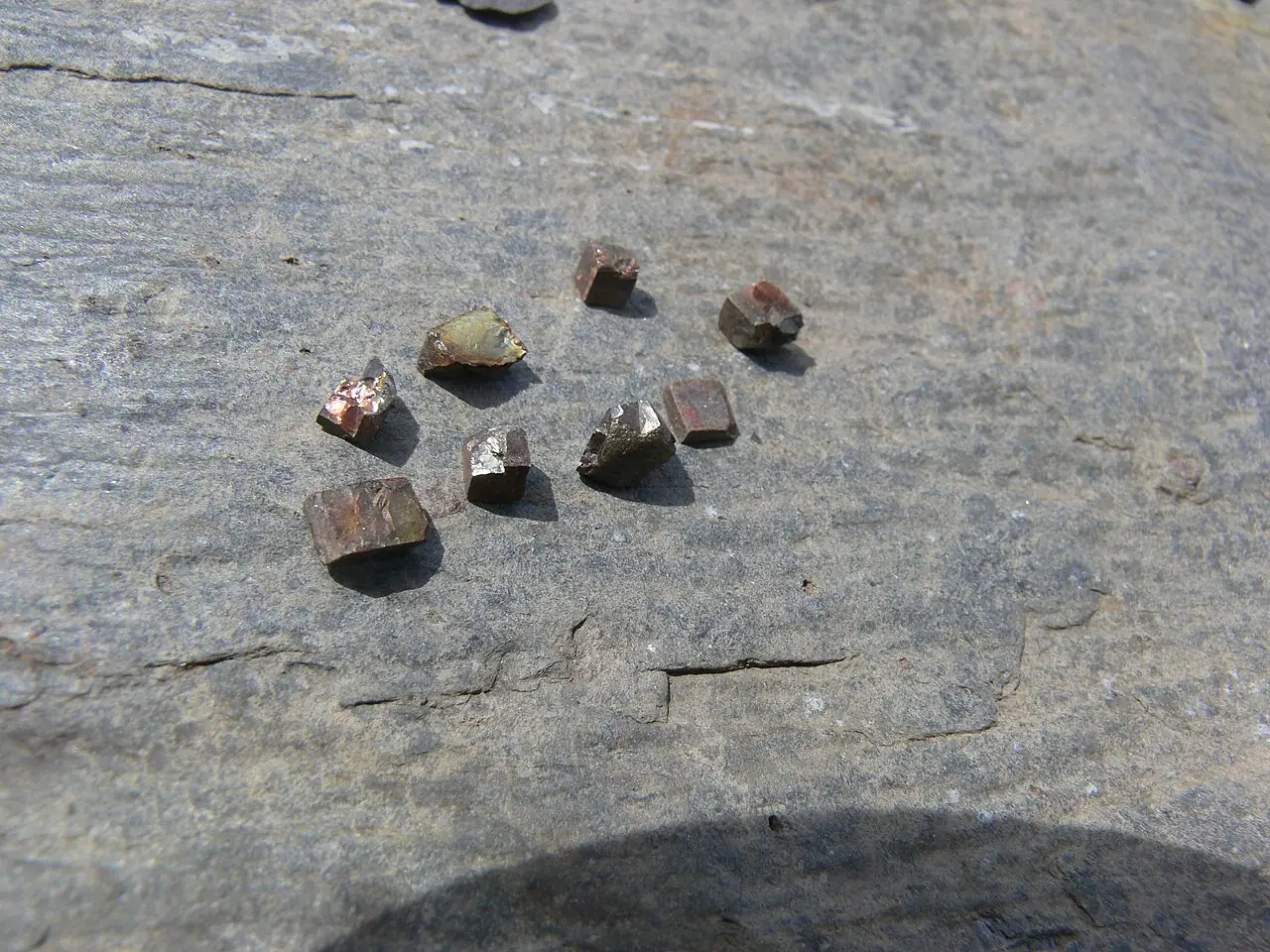
    Small shiny cubic pyrite crystals on a gray rock
    Small shiny cubic pyrite crystals on a gray rock. See credits.

    cubic

    adjective
    /ˈkjuːbɪk/  KYOO-bik

    The crystal system with three axes of equal length, all at right angles. Halite, pyrite, fluorite and diamond are cubic.

    “Fluorite crystals are cubic, so all three axes have the same length.”

    Word family / collocations: cubic system; isometric; cube (noun)

    立方(等轴)晶系的
    Set 10

    tetragonal

    adjective
    /tɛˈtræɡənəl/  teh-TRAG-uh-nul

    The crystal system with three axes at right angles; two are equal and the third is a different length, like a square-ended box.

    “Zircon crystals are tetragonal.”

    Word family / collocations: tetragonal system; tetragonal prism; tetra- (four)

    四方晶系的
    Set 10

    orthorhombic

    adjective
    /ˌɔːrθoʊˈrɑːmbɪk/  or-thoh-ROM-bik

    The crystal system with three axes at right angles, all of different lengths.

    “Topaz crystals are orthorhombic.”

    Word family / collocations: orthorhombic system; rhombus; ortho- (straight)

    正交(斜方)晶系的
    Set 10

    hexagonal

    adjective
    /hɛkˈsæɡənəl/  hek-SAG-uh-nul

    The crystal system with three equal axes in a flat plane at 120 degrees to each other, plus a fourth axis at right angles to them.

    “Beryl, the mineral of emerald, is hexagonal.”

    Word family / collocations: hexagonal prism; six-sided; hexagon (noun)

    六方晶系的
    Set 10

    trigonal

    adjective
    /ˈtrɪɡənəl/  TRIG-uh-nul

    The crystal system with three-fold symmetry: turn the crystal 120 degrees around its main axis and it looks the same. Quartz, calcite and corundum are trigonal.

    “Quartz is trigonal, so its lattice repeats every 120 degrees around the long axis.”

    Word family / collocations: trigonal system; rhombohedral; three-fold

    三方晶系的
    Set 10

    monoclinic

    adjective
    /ˌmɑːnoʊˈklɪnɪk/  mon-oh-KLIN-ik

    The crystal system with three unequal axes. Two meet at a right angle and the third is tilted.

    “Gypsum crystals are monoclinic, so one axis leans.”

    Word family / collocations: monoclinic system; mono- (one); -clinic (leaning)

    单斜晶系的
    Set 10

    triclinic

    adjective
    /traɪˈklɪnɪk/  try-KLIN-ik

    The crystal system with three unequal axes, none at a right angle. It has the least symmetry of all seven systems.

    “Turquoise and kyanite are triclinic.”

    Word family / collocations: triclinic system; tri- (three); -clinic (leaning)

    三斜晶系的
    Set 10

    prism

    noun
    /ˈprɪzəm/  PRIZ-um

    A shape with two matching ends and long, flat, parallel sides, like a pencil. Many crystals grow as prisms.

    “A quartz crystal is a six-sided prism with a pointed tip.”

    Word family / collocations: prismatic habit; hexagonal prism; prism (glass that splits light)

    棱柱
    Set 10

    termination

    noun
    /ˌtɜːrmɪˈneɪʃən/  TER-mih-NAY-shun

    The pointed or flat end of a crystal, where growth stopped.

    “A Herkimer diamond has a termination at both ends.”

    Word family / collocations: doubly terminated; terminated crystal; terminate (verb)

    晶体顶端(晶尖)
    Set 10

    axis

    noun
    /ˈæksɪs/  AK-sis

    An imaginary line through a crystal, used to describe its shape and symmetry. The plural is axes (AK-seez).

    “If you turn the crystal 120 degrees around this axis, it looks the same.”

    Word family / collocations: crystal axes; axis of symmetry; x-axis, y-axis, z-axis

    轴(晶轴)
    Set 10

    Quiz yourself: Set 10

    6 questions: 3 multiple choice and 3 typed. Score 5 or more to earn 5 points.

    10 spots, 1 world

    The expedition map

    Ten famous crystal places. Tap a numbered dot to jump to its card. Two of them are in Hunan province, China.

    Simple equirectangular map drawn from Natural Earth land data (public domain). The two Hunan mines are only about 80 km apart, so their dots are shown slightly apart with thin lines to the true spots. Minas Gerais is a state-level point. On a narrow screen, slide the map sideways.

    Field guide

    Ten places every Crystal Hunter should know

    For each spot you will find what forms there, why it forms there, whether you can really collect there, safety and legal notes, a story, and a difficulty rating. “Hunter difficulty” means how hard it is for a normal person to get a specimen from the ground there (1 = easy family dig, 5 = not possible). Facts were checked against the sources listed at the end. Rules, prices and opening times change, so always check before you travel.

    Read this first: safety and the law

    Never enter abandoned mines, never trespass, never collect in a protected area without a permit, and always go with an adult. Many of these places are closed on purpose.


    1

    Naica — Cave of the Crystals

    Chihuahua, Mexico · 27.85°, -105.50° 奈卡水晶洞
    ClosedSelenite (gypsum, CaSO₄·2H₂O)Hunter difficulty
    Giant white selenite crystal beams filling the Cave of the Crystals in Naica, Mexico, with a tiny person for scale
    Giant selenite beams in the Cave of the Crystals. The tiny figure for scale is a person. Photo: Alexander Van Driessche, CC BY 3.0

    What forms here

    Giant, clear-to-milky beams of selenite, the crystal form of gypsum. The biggest are about 11–12 metres long and weigh many tonnes.

    Why here (the geology)

    A pool of hot, mineral-rich water sat in a cavity about 300 metres underground, heated by a magma body below. The water stayed near 58 °C, a temperature where gypsum slowly crystallizes. Because the water cooled so little, only a few seeds formed, and each one fed for at least 500,000 years.

    Can you find or collect it?

    Closed to everyone except scientists. Flooded again since 2015. You cannot collect here. Miners found the cave in 2000 while digging a new tunnel in a lead-zinc-silver mine. Inside, the air is about 58 °C and almost 100% humid, so even scientists wore cooling suits and breathing masks and could stay only a short time. Pumps kept the mine dry until 2015, then the cave began to flood again.

    Safety and legal

    Legally and physically off limits. Lesson for hunters: if a place can kill you in minutes, it is not a place for a hobbyist.

    Story / fun fact

    Gypsum has a Mohs hardness of only 2, so you can scratch it with a fingernail. These crystals are among the softest giants on Earth. They are huge not because they are strong, but because the cave was calm and stable for so long.

    地下约300米的巨型石膏(透石膏)晶体,最长约11—12米;洞内约58℃、湿度近100%,现已不对公众开放。

    2

    Herkimer County — “Herkimer Diamonds”

    New York, USA · 43.13°, -74.96° 赫基默“钻石”(石英)
    Public digQuartz (SiO₂), double-terminatedHunter difficulty
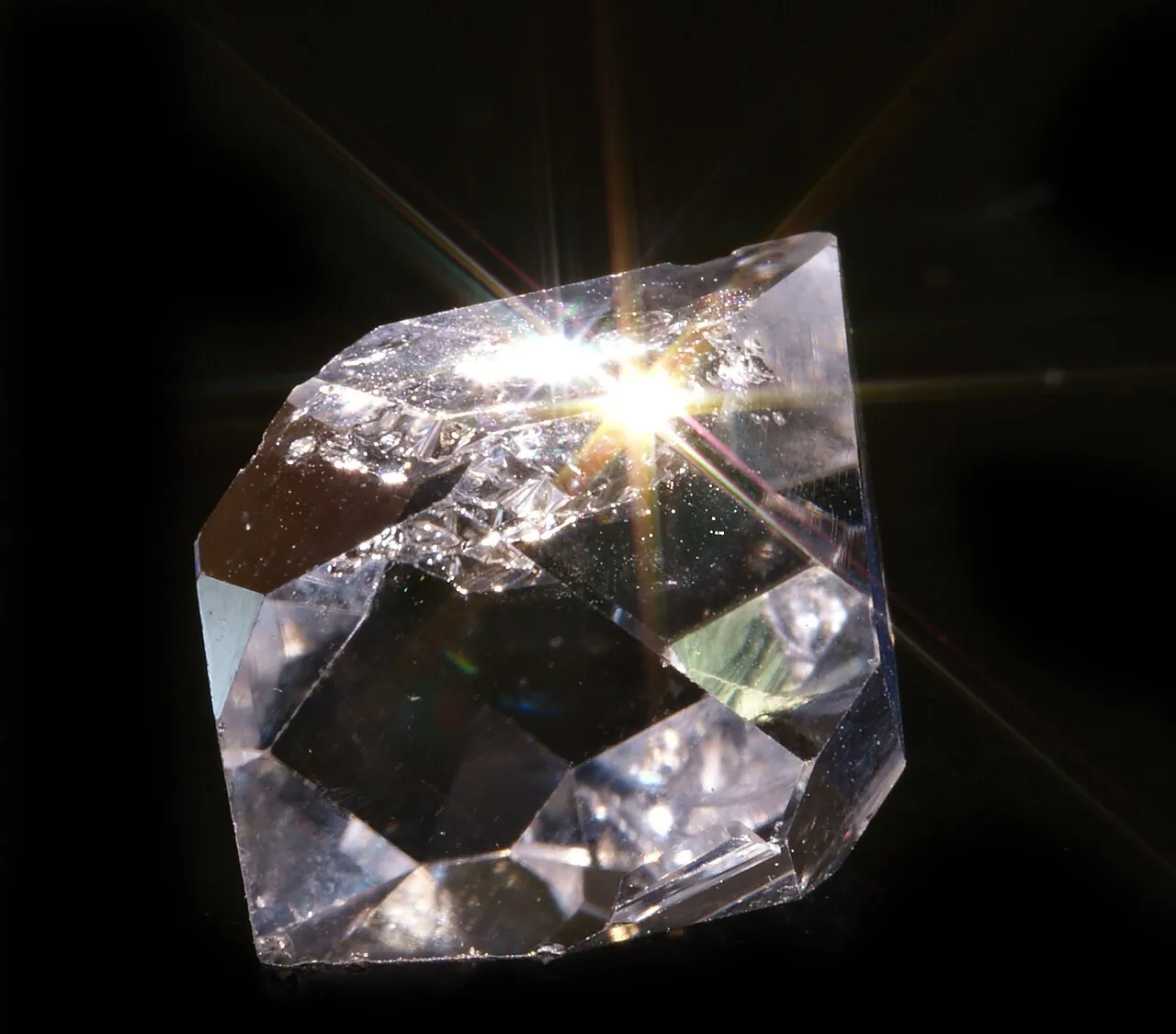
    A clear Herkimer quartz crystal with points at both ends, sparkling against a black background
    A Herkimer “diamond”: a quartz crystal with a point at both ends. Photo: Didier Descouens, CC BY-SA 4.0
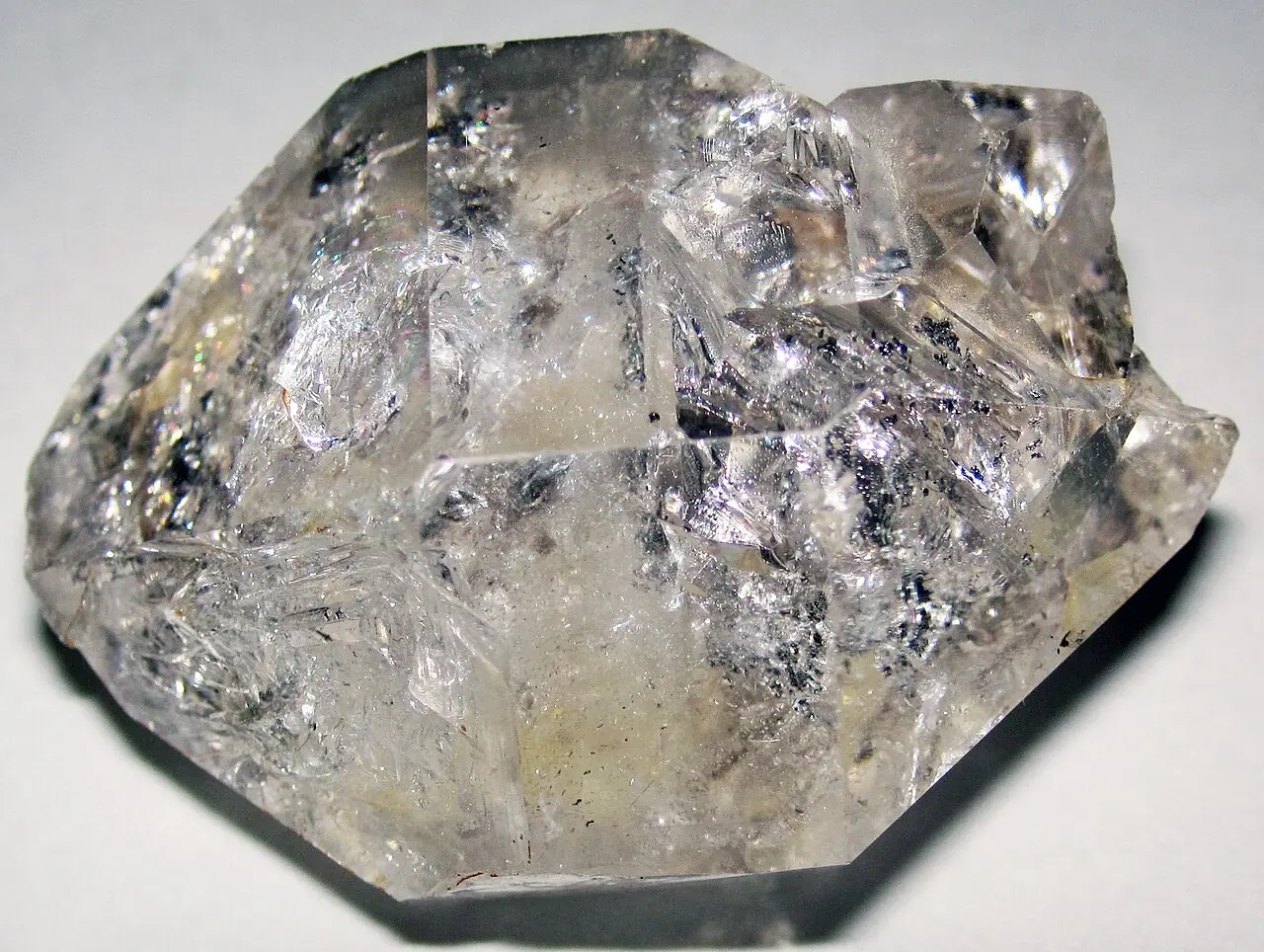
    A clear double-terminated Herkimer quartz crystal with small inclusions
    Another double-terminated Herkimer quartz. Note the tiny inclusions inside. Photo: James St. John, CC BY 2.0

    What forms here

    Very clear, naturally faceted quartz crystals with a termination at both ends and about 18 faces. They are not diamonds. Their hardness is 7.

    Why here (the geology)

    The crystals grew in small cavities (vugs) inside a Cambrian dolostone, a sedimentary rock about 500 million years old. Silica-rich water seeped into the cavities, and quartz grew freely into open space, so both ends of the crystal could develop a point.

    Can you find or collect it?

    Public fee digs. You keep what you find. Several private mines near Middleville, NY, let the public dig for a daily fee. Bring a hammer, a chisel, safety glasses, gloves and sturdy shoes. Many families also search the mine's tailings. Check each mine's current opening season and prices before you go.

    Safety and legal

    Easy and legal on private land, with the owner's rules. Always wear eye protection. Flying chips can injure eyes.

    Story / fun fact

    The name is a trick: they are quartz, not diamond. Because they are so sparkly and so perfectly shaped, people once thought someone had cut them. Some contain tiny black specks of carbon-rich material or small water bubbles.

    纽约州的“赫基默钻石”其实是两端都有晶尖的透明石英,产于约5亿年前的白云岩空洞中;私人矿场付费可挖,所得归己。

    3

    Mount Ida — Quartz Crystal Capital

    Arkansas, USA · 34.55°, -93.63° 阿肯色州芒特艾达(石英之都)
    Public digQuartz (SiO₂)Hunter difficulty
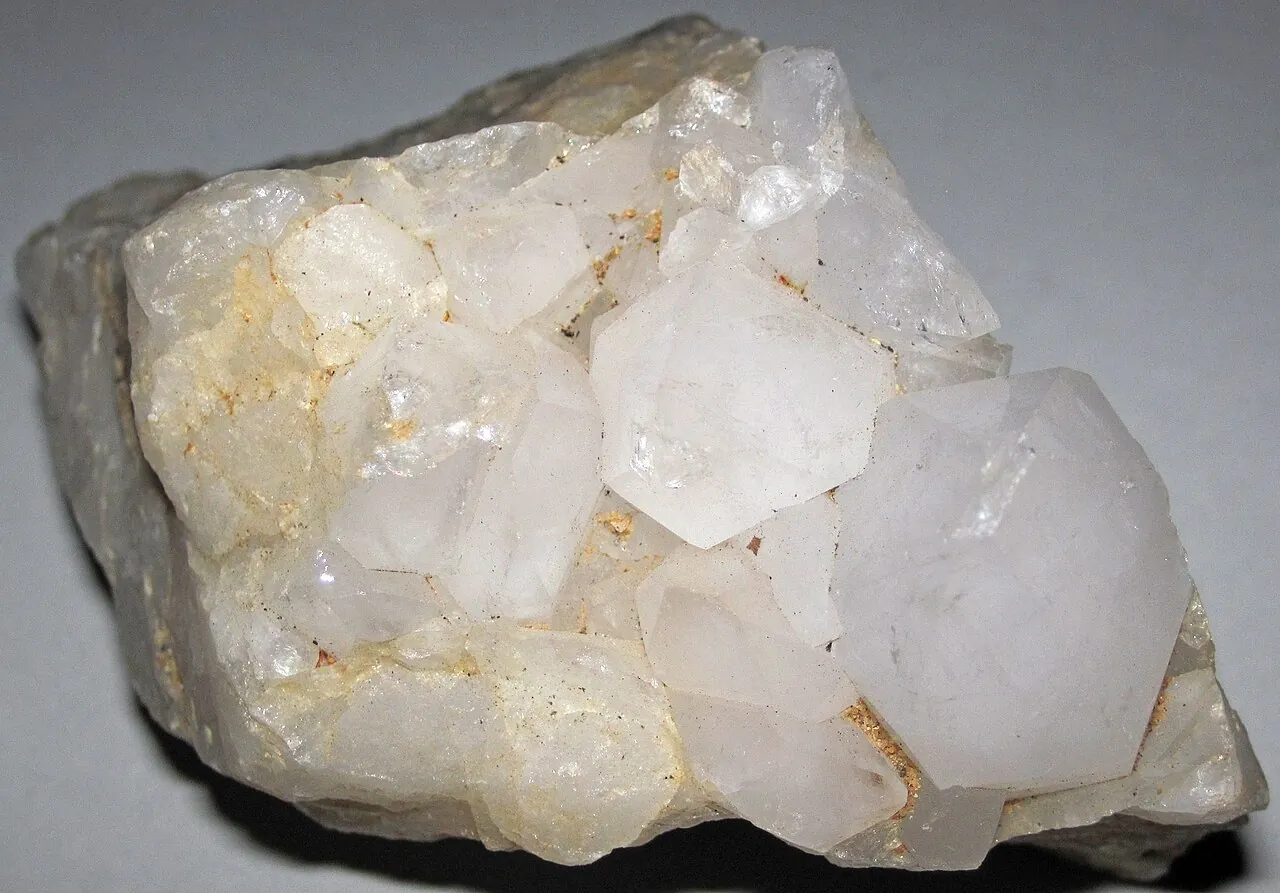
    A cluster of clear quartz crystals from the Coleman Quartz Mine in Arkansas
    Hydrothermal quartz crystals from the Coleman Quartz Mine, Arkansas. Photo: James St. John, CC BY 2.0
    A tall, clear quartz crystal point on a cluster of smaller crystals from Mount Ida, Arkansas
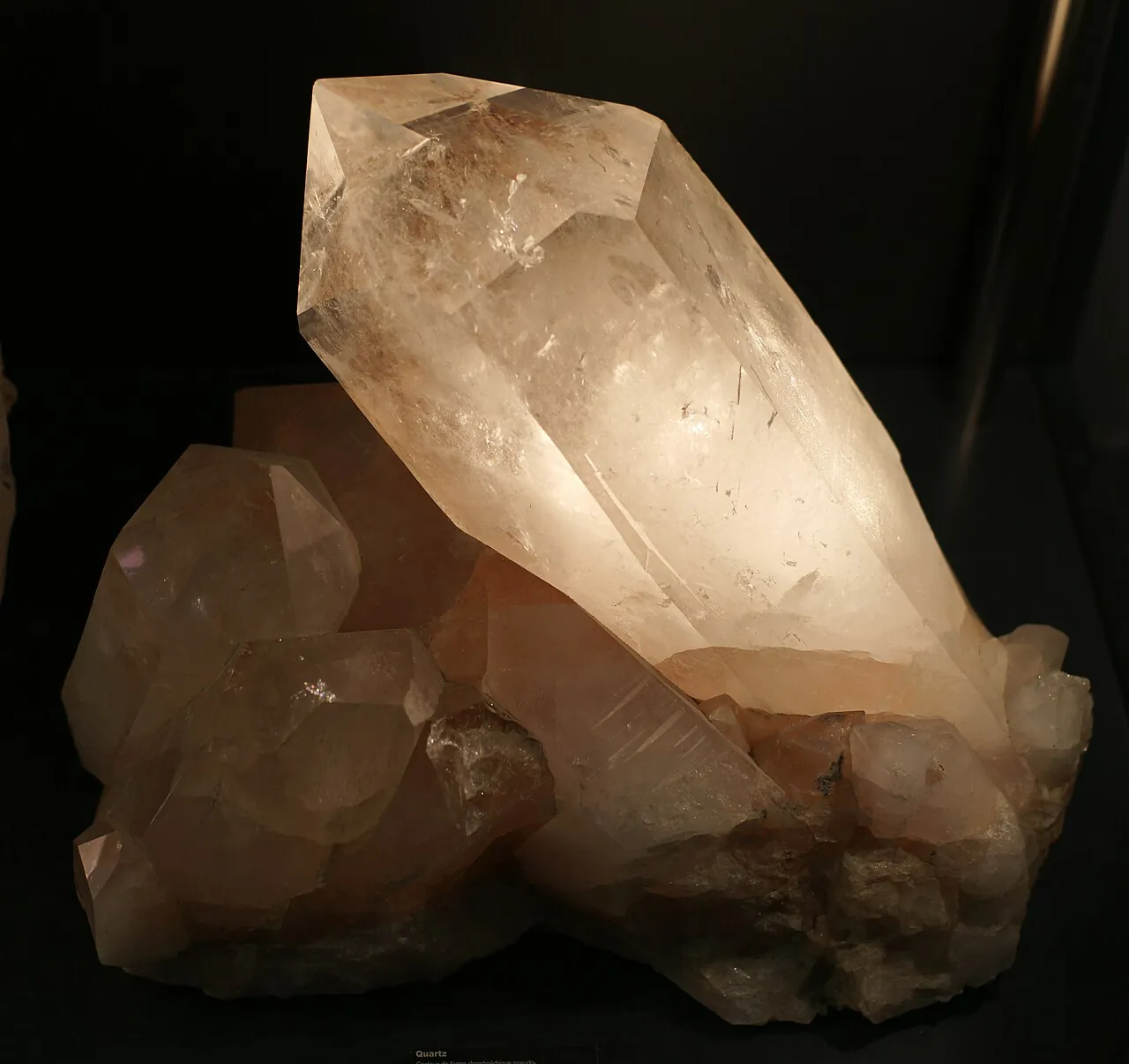
    A large, clear quartz point from Mount Ida, Arkansas. Photo: Sailko, CC BY 3.0

    What forms here

    Clear quartz points and clusters. Some crystals are bigger than your hand.

    Why here (the geology)

    The Ouachita Mountains were squeezed and folded about 300 million years ago. Hot, silica-rich water then flowed through cracks in the folded sedimentary rocks. As it cooled, quartz crystallized on the walls of those cracks and cavities.

    Can you find or collect it?

    Fee digs plus a free surface-collecting area in the national forest. Mount Ida calls itself the “Quartz Crystal Capital of the World.” Fee-dig mines around town let visitors dig for a daily price. The U.S. Forest Service also allows free surface collecting for personal use at Crystal Vista in the Ouachita National Forest (no commercial sale). Rules and prices change, so check before you go.

    Safety and legal

    Easy. Follow the posted rules, stay on public land or paid mine areas, never dig on private land without permission, and bring water in summer.

    Story / fun fact

    In World War II, military radios needed quartz crystals that vibrate at an exact frequency. The U.S. government bought Arkansas quartz for that purpose. The Ouachitas are also unusual because the ridges run east–west instead of north–south.

    阿肯色州欧乔奇塔山区的热液石英,约3亿年前造山运动后形成;付费矿场可挖,国家森林区可免费地表采集(仅限个人)。

    4

    Minas Gerais — Gem Pegmatites and Imperial Topaz

    Minas Gerais, Brazil · -18.50°, -44.00° 米纳斯吉拉斯(巴西宝石之乡)
    Licensed minesTourmaline, topaz, aquamarine, morganite and moreHunter difficulty
    Two green tourmaline crystals in white quartz from Minas Gerais, Brazil
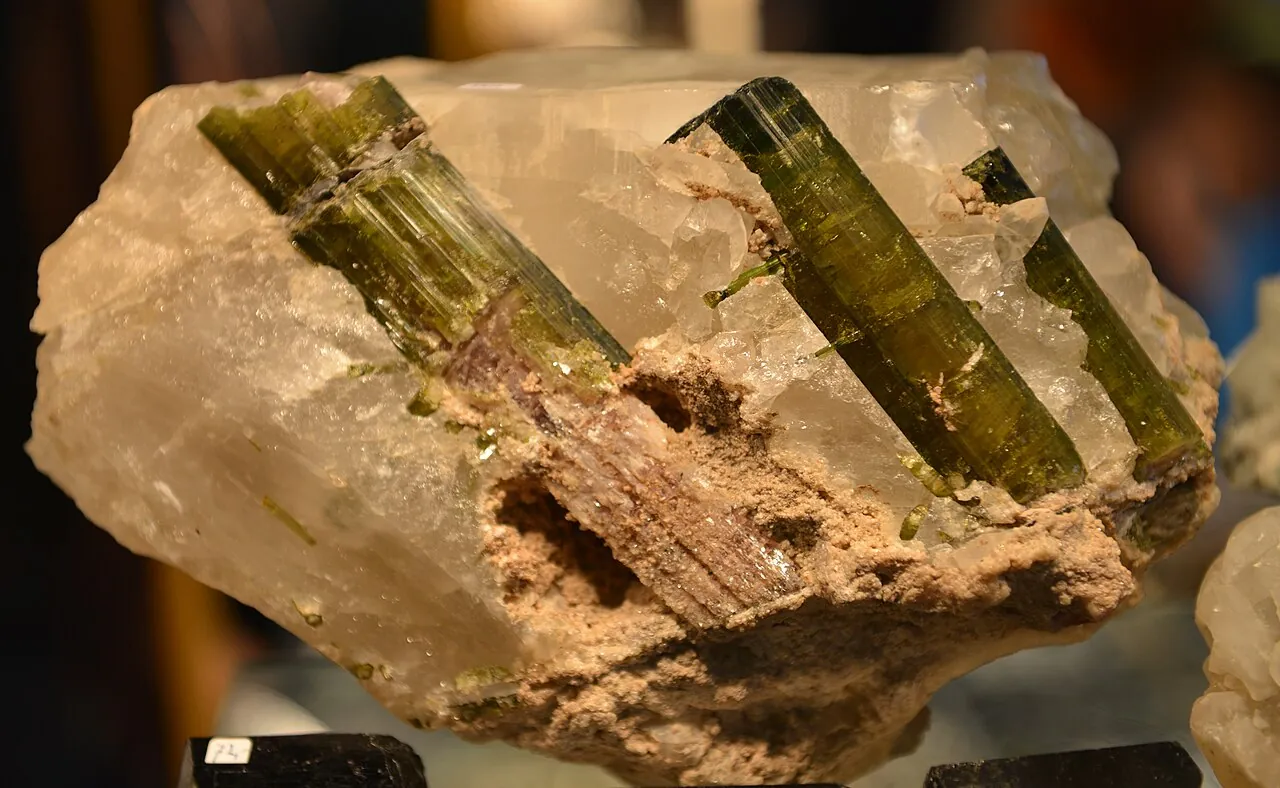
    Green tourmaline crystals in quartz, from Minas Gerais. Photo: LZ6387, CC BY-SA 4.0
    A thin blue tourmaline crystal (indicolite) with purple mica from Minas Gerais
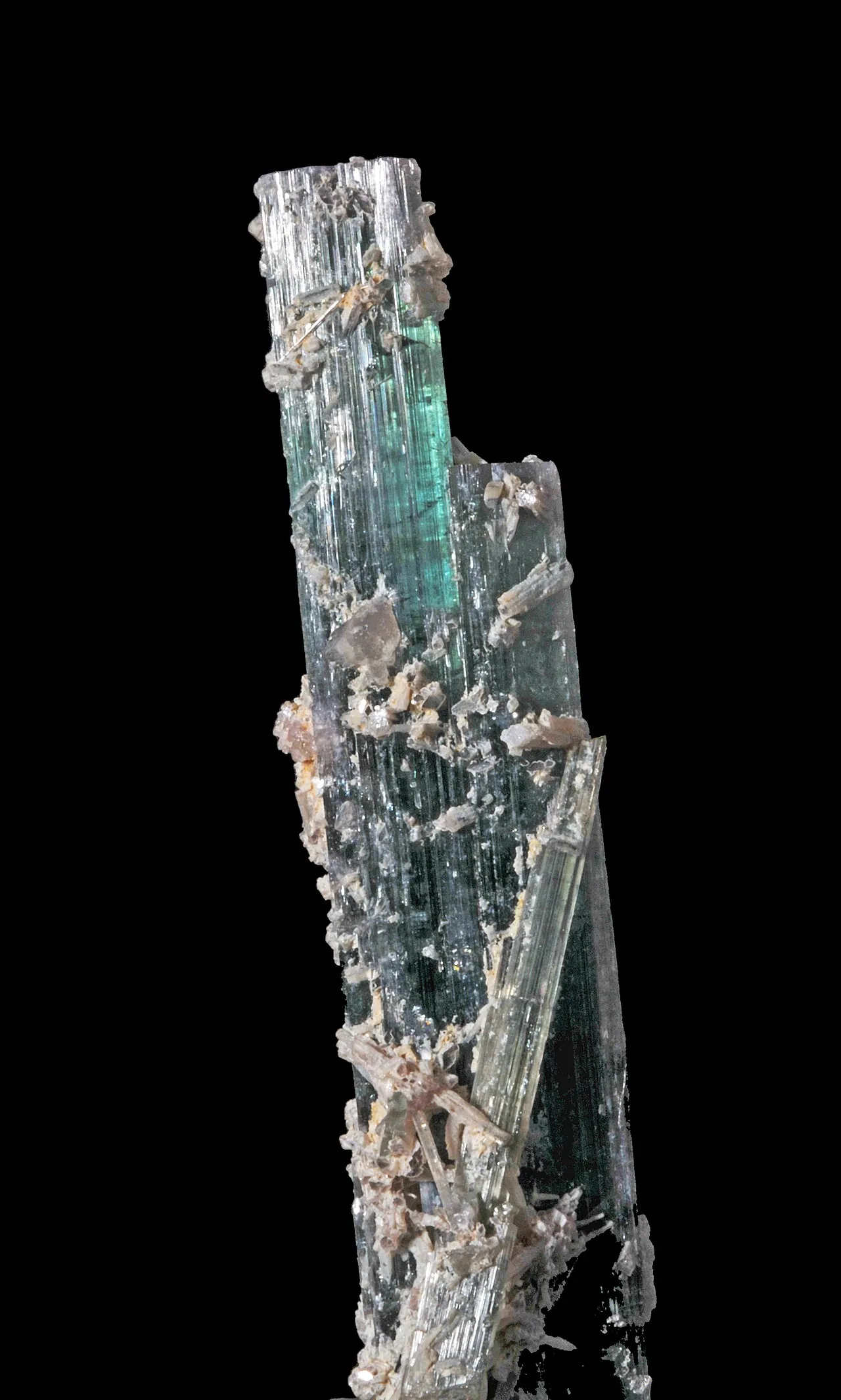
    Blue tourmaline (indicolite) with lepidolite mica. Photo: Parent Géry, CC BY-SA 3.0
    A single orange-pink imperial topaz crystal from Ouro Preto, Brazil
    Imperial topaz from the Vermelhão mine, Ouro Preto. Photo: Parent Géry, Public domain

    What forms here

    Tourmaline in many colors, aquamarine, morganite, topaz and big quartz crystals. Near Ouro Preto, the rare orange-pink “imperial topaz.”

    Why here (the geology)

    Around Araçuaí and Governador Valadares, huge pegmatites cooled slowly from water-rich magma, leaving room for giant gem crystals. Imperial topaz near Ouro Preto is different: it grew from hot water (hydrothermal) in veins, not in a pegmatite. Brazil’s ancient rocks hold a lot of lithium, boron and beryllium, the ingredients for tourmaline and beryl.

    Can you find or collect it?

    Licensed mines and dealers. Visit museums, buy with provenance. Almost all land is under mining licences, often small family or cooperative mines (garimpos). Tourists can visit gem shops and mineral museums, including in the historic city of Ouro Preto. If you buy a stone, ask the seller for its locality and provenance.

    Safety and legal

    Not a place for random digging. Mines can be unstable and are private. Go with a licensed guide or visit a museum.

    Story / fun fact

    The state’s name means “General Mines.” The gold rush that began in the 1690s gave the region its name. Later, miners found that the ‘ugly’ rock around the gold sometimes hid some of the world’s best gems.

    巴西米纳斯吉拉斯州盛产电气石、托帕石、海蓝宝等;伟晶岩缓慢冷却可长出大晶体;多为持证矿山,可参观博物馆和正规店铺。

    5

    Tsumeb — The Mineral Treasure Chest

    Otjikoto Region, Namibia · -19.25°, 17.87° 楚梅布(纳米比亚)
    ClosedAzurite, malachite, smithsonite, dioptase and 300+ othersHunter difficulty
    Deep blue azurite crystals with green malachite from Tsumeb, Namibia
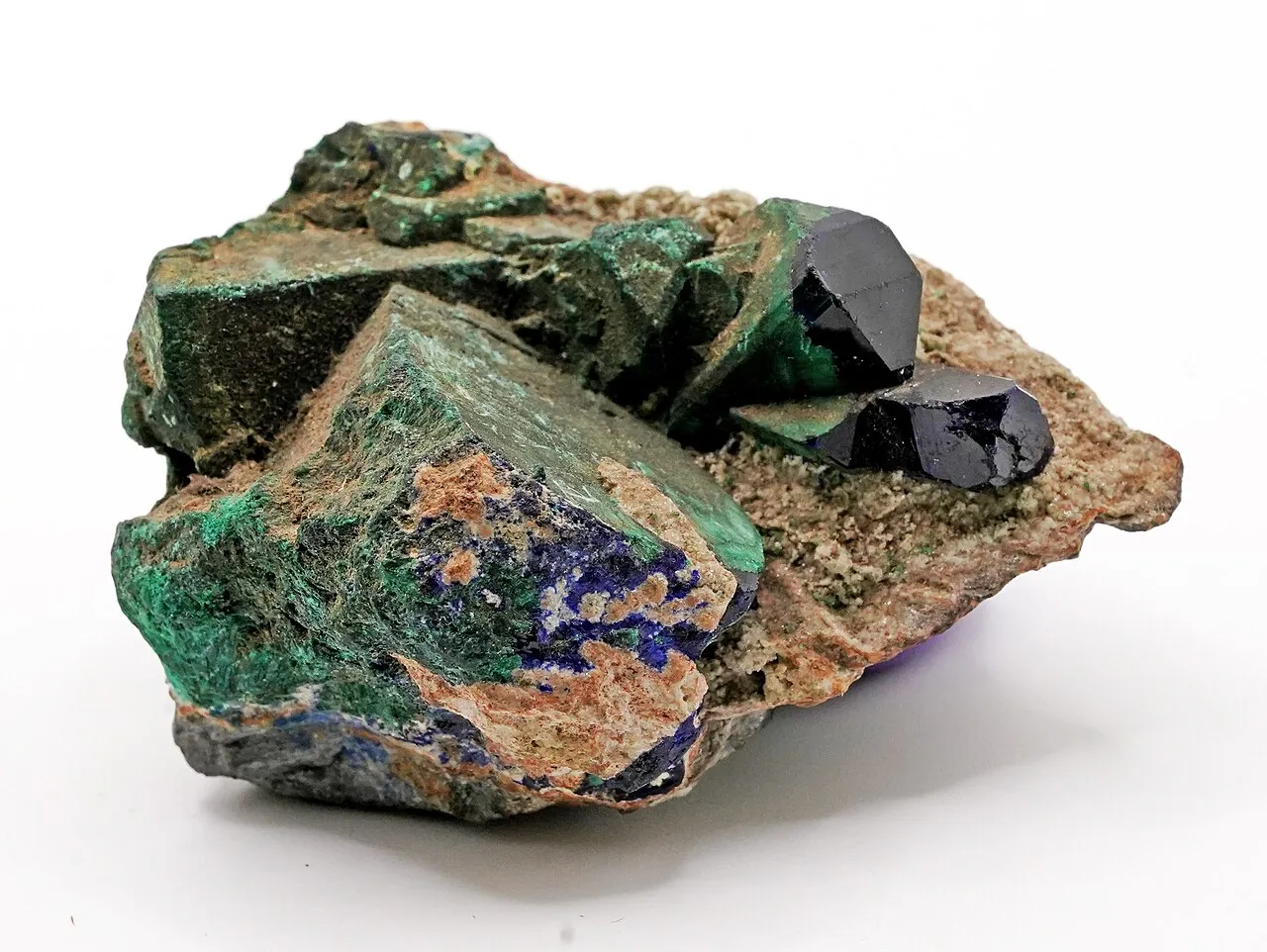
    A blue azurite crystal group from Tsumeb. The photo shows a specimen of about 123 g. Photo: Holger Krause, CC BY-SA 4.0

    What forms here

    Deep-blue azurite, green malachite, colorless to white smithsonite, emerald-green dioptase, and more than 300 mineral species in total (counts vary by source).

    Why here (the geology)

    A pipe-shaped ore body in dolomite rock carried copper, lead, zinc and many other metals. Over millions of years, oxygen-rich groundwater slowly changed the top part of the ore body (the oxidation zone), turning plain sulfides into colorful carbonates and other minerals.

    Can you find or collect it?

    Mining has ended; the old mine is closed to collectors. See specimens in museums. The mine is closed and the old workings are dangerous. Today the best way to see Tsumeb minerals is in major museums and in the care of specialist dealers. Ask for provenance.

    Safety and legal

    Do not enter old mines. Collapse, bad air and flooding kill people every year.

    Story / fun fact

    Tsumeb is the type locality of dozens of minerals, meaning they were first scientifically described there. Mineral collectors rank it among the richest mineral localities ever found.

    楚梅布矿含300多种矿物(说法不一),以蓝铜矿、孔雀石等闻名;矿山已关闭,可在博物馆观赏。

    6

    Swiss Alps — Grimsel Crystal Cleft

    Grimsel, Bern, Switzerland · 46.60°, 8.33° 瑞士阿尔卑斯山(格里姆瑟尔水晶裂隙)
    Tour onlyRock crystal and smoky quartz (SiO₂)Hunter difficulty
    Rock crystals lining the walls of the protected crystal cleft at Gerstenegg, Switzerland
    The protected crystal cleft at Gerstenegg, inside the Grimsel granite. Photo: Kraftwerke Oberhasli AG, CC BY-SA 3.0 de
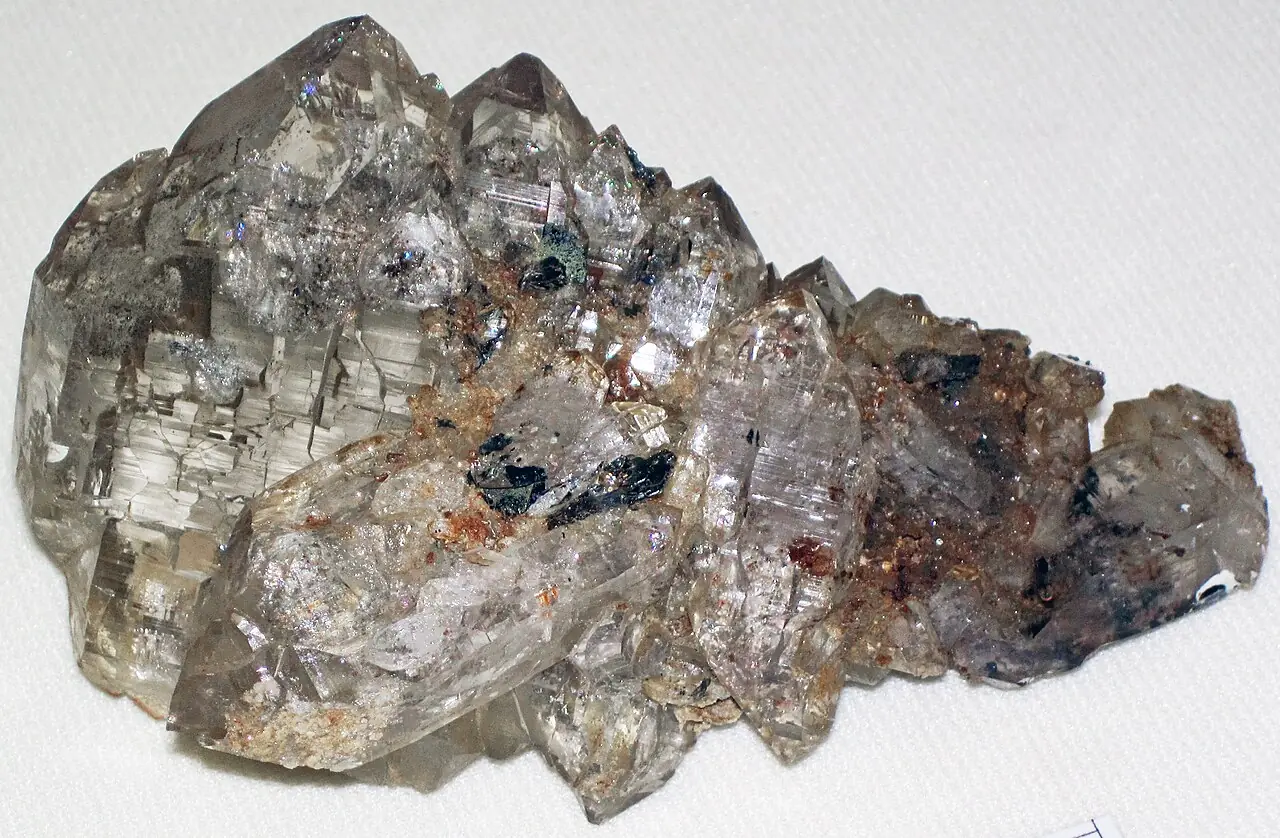
    A gray-clear quartz crystal group from the Swiss Alps
    Alpine quartz from the Cavradi Gorge, Switzerland. Photo: James St. John, CC BY 2.0

    What forms here

    Clear rock crystal and gray-brown smoky quartz, often in beautiful clusters lining open cracks called fissures or “clefts.”

    Why here (the geology)

    As the Alps rose, the granite cracked. Groundwater heated by the hot rock dissolved quartz, flowed through these cracks and re-deposited quartz as crystals on the walls. The cracks stayed open inside the mountain, so the crystals could grow with room to spare.

    Can you find or collect it?

    Visit only on a guided power-plant tour. Collecting needs a permit in the protected area. The Gerstenegg cleft, found in 1974 and protected the same year, can be seen only on the guided “Grimsel Undergrund” tour of the power plant (check the dates; it is seasonal). Collecting elsewhere in the Grimsel area is controlled by the canton of Bern. You need a permit, and there are rules about where and how.

    Safety and legal

    Alpine hunting is real mountaineering. Strahler (crystal hunters) train for years. Beginners should go with a guide.

    Story / fun fact

    Switzerland has a centuries-old tradition of crystal hunters called Strahler. Gerstenegg was found on 4 October 1974 while engineers were building power-plant tunnels, and the Bern government protected it within months.

    阿尔卑斯造山运动中,花岗岩裂隙里热水沉淀出水晶和烟晶;格里姆瑟尔水晶洞只能随导览参观,采集需许可证。

    7

    Mogok — Valley of Rubies

    Mandalay Region, Myanmar · 22.92°, 96.50° 抹谷(缅甸红宝石之乡)
    Restricted / unsafeRuby and sapphire (corundum, Al₂O₃), spinel, peridotHunter difficulty
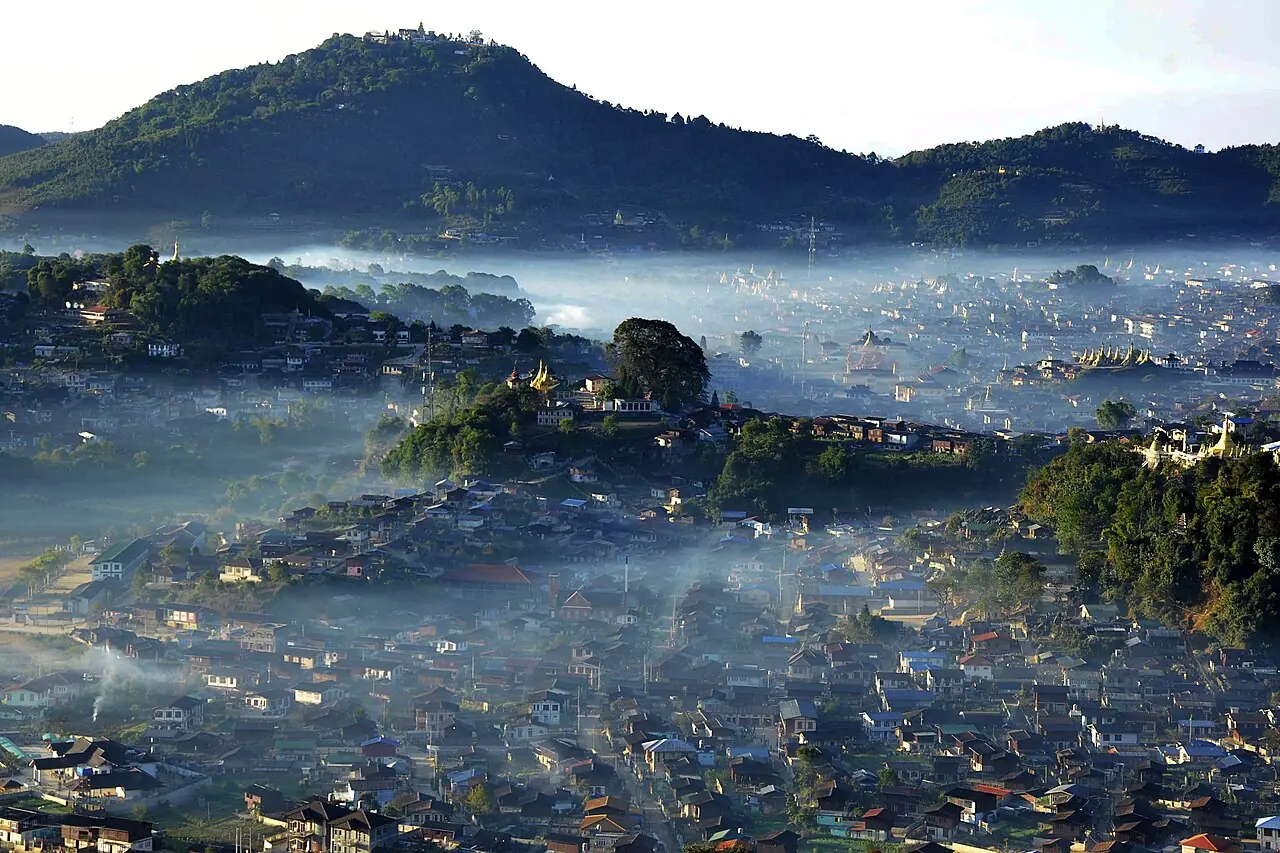
    Green hills with morning mist over the Mogok area of Myanmar
    Hills and mist over the Mogok area, Myanmar. Photo: Ko_Tar_Gyi, CC BY-SA 4.0
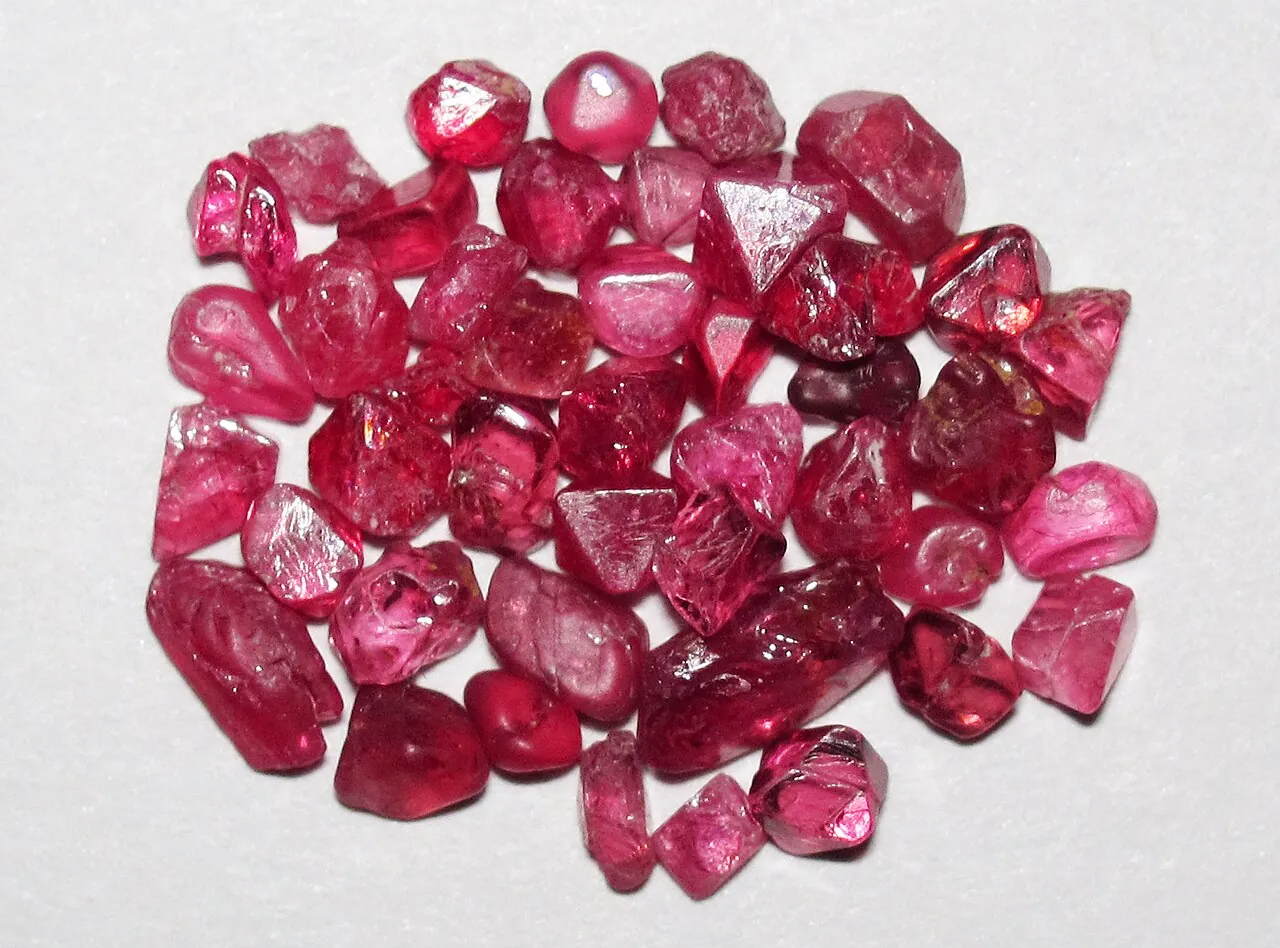
    A pile of small, deep-red spinel crystals from the Mogok belt, Myanmar
    Red spinel crystals from the Mogok Metamorphic Belt (Momeik Township, near Mogok). Photo: James St. John, CC BY 2.0

    What forms here

    Red rubies, blue sapphires and red spinel, plus other gems. The best rubies are deep red, sometimes called “pigeon’s blood.”

    Why here (the geology)

    Limestone was heated and squeezed (metamorphism) into marble when India collided with Asia. Hot fluids inside the marble allowed aluminum oxide to crystallize as corundum. Chromium impurities turned it red. Weathering then washed rubies into river gravels (alluvial deposits).

    Can you find or collect it?

    Restricted and unsafe. Check government travel advice. Not for tourists. Locals dig and wash gravel using hand tools and pumps. Foreign visitors have faced restrictions, and parts of Myanmar are affected by conflict. Please do not plan a trip here. The safest way to learn is through museums, books and ethical sourcing.

    Safety and legal

    Unsafe. Treat this entry as ‘read and learn’ only. Buying gems with unclear origin can fund harm. Ask about ethical sourcing.

    Story / fun fact

    Mogok is also called the “Valley of Rubies.” Rubies and spinel are so similar in color that famous “rubies” in royal crowns were later found to be spinels. The red in both comes from chromium.

    缅甸抹谷以红宝石、尖晶石闻名;大理岩中的刚玉含铬而呈红色。该地区受限且不安全,仅作了解,请勿前往。

    8

    Xianghuapu — Hunan’s Green Fluorite

    Linwu County, Chenzhou, Hunan, China · 25.33°, 112.61° 香花铺(湖南郴州,萤石)
    ClosedFluorite (CaF₂)Hunter difficulty
    A group of green fluorite crystals from Xianghuapu, Hunan, China
    Green fluorite from Xianghuapu, Hunan, in the Sorbonne collection (Paris). Photo: Marie-Lan Taÿ Pamart, CC BY 4.0

    What forms here

    Translucent green fluorite cubes and multi-faced crystals with a glassy luster. Its Mohs hardness is 4, and fluorite is the mineral that gave the word fluorescence its name.

    Why here (the geology)

    Hot, fluorine-rich fluids, linked to granite magma, moved through cracks in older rocks. As they cooled and reacted with calcium-rich rocks, fluorite crystallized in open spaces. Hunan sits in southern China’s great belt of granite-related tin, tungsten and fluorine deposits.

    Can you find or collect it?

    Commercial mine. Not open to collectors. Learn from museums. This is a working mine on controlled land. Mining without a licence is illegal in China. For a 12-year-old in Beijing, the best trip is the Geological Museum of China in the Xisi area, which has minerals from across China (check opening hours and booking first).

    Safety and legal

    Closed to collectors. Do not trespass. Explore through museums, collections and licensed dealers.

    Story / fun fact

    Fluorite in a cube is a perfect picture of a cubic lattice. It also cleaves into octahedra, so you can break a cube and get a diamond-shaped solid.

    湖南郴州临武香花铺产绿色萤石(硬度4,立方晶系);矿山不对采集者开放,可去北京的中国地质博物馆学习。

    9

    Yaogangxian — Tungsten and Crystal Blue

    Yizhang County, Chenzhou, Hunan, China · 25.64°, 113.32° 瑶岗仙(湖南郴州,钨矿与萤石)
    ClosedWolframite, fluorite, quartz, calciteHunter difficulty
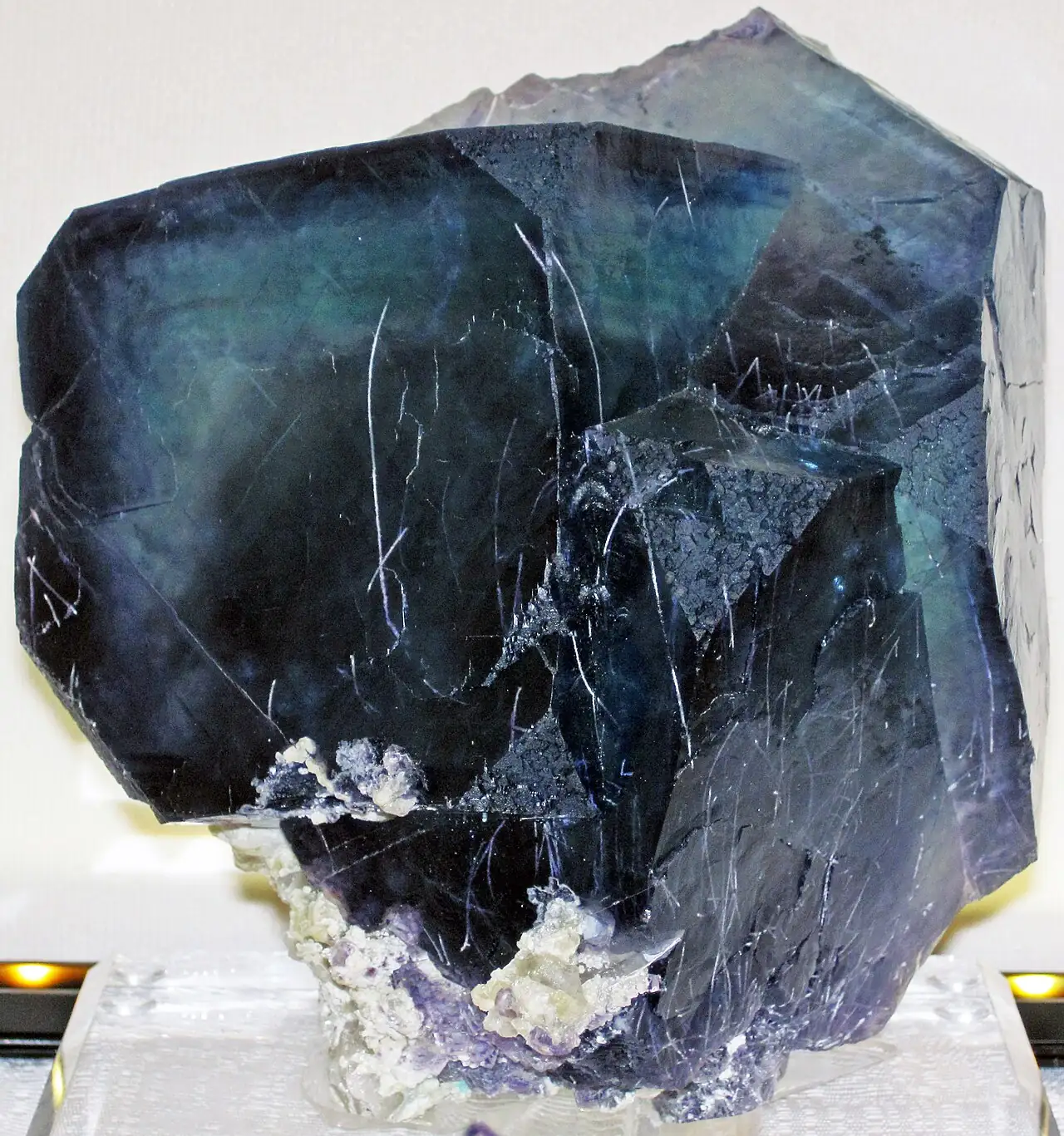
    A large dark blue and purple fluorite crystal from Yaogangxian, Hunan, China
    Fluorite from the Yaogangxian Mine. About 150 million years old. Photo: James St. John, CC BY 2.0
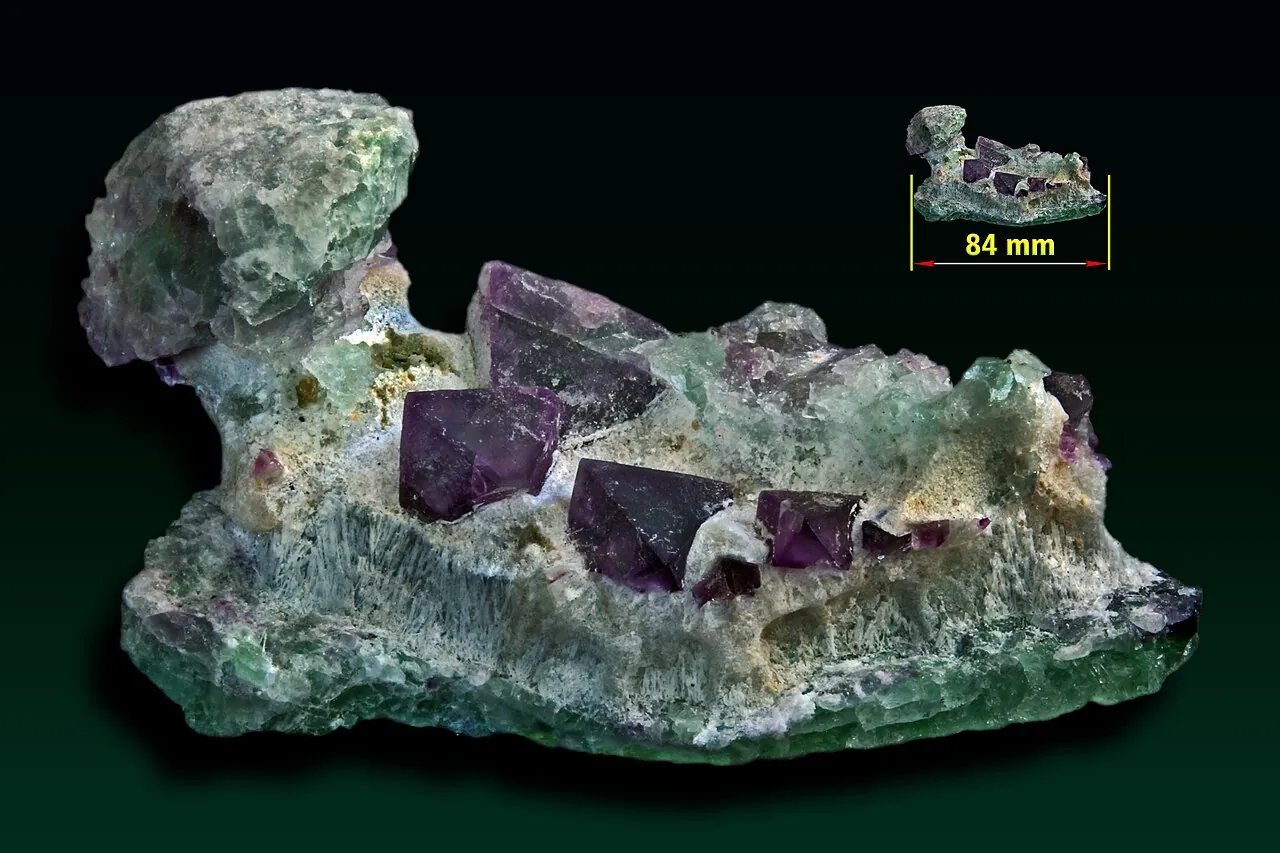
    Purple and green fluorite cubes sitting on white aragonite from Yaogangxian
    Purple fluorite on aragonite from Yaogangxian. Photo: Lech Darski, CC BY-SA 4.0
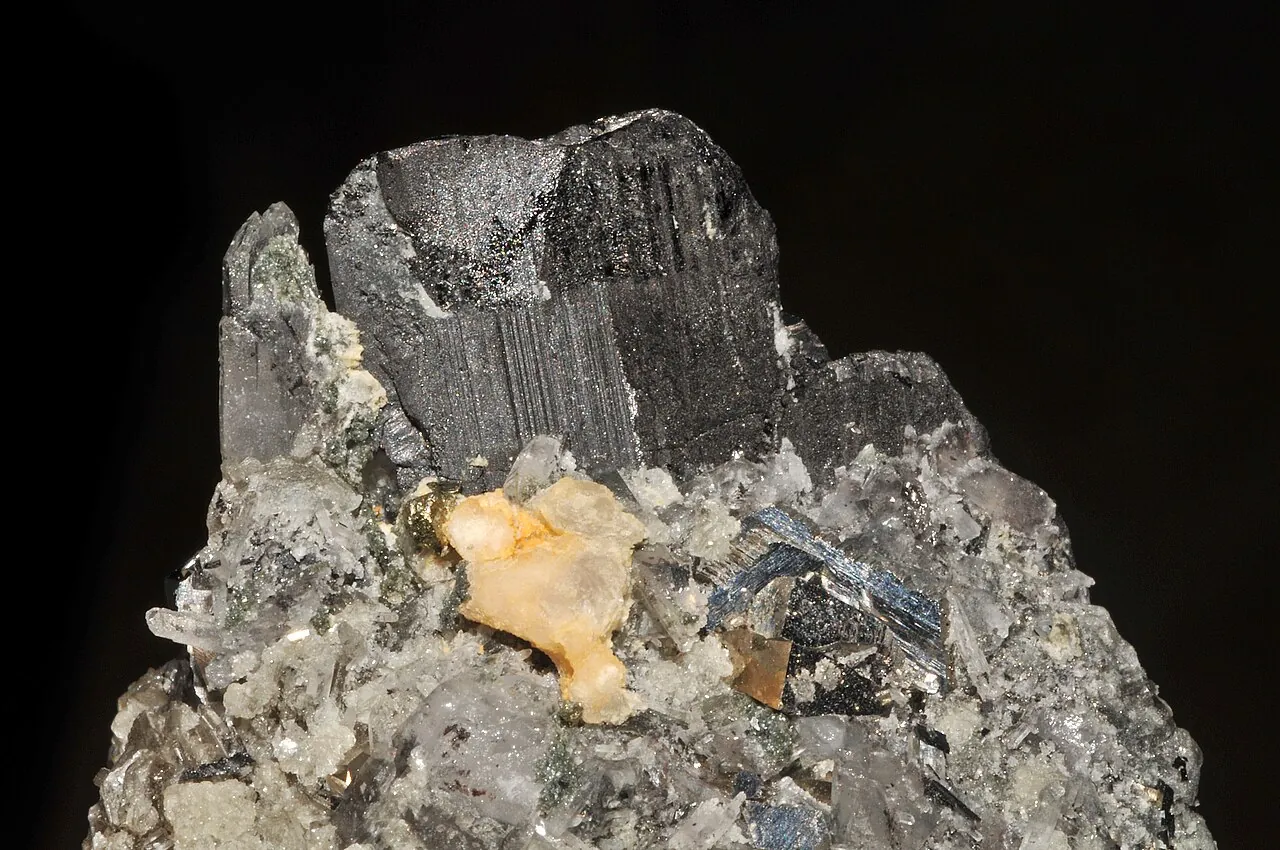
    A dark, shiny wolframite crystal cluster with quartz and calcite from Yaogangxian
    Wolframite with arsenopyrite, quartz and calcite from the Yaogangxian W-Sn ore field. Photo: Parent Géry, CC BY-SA 3.0

    What forms here

    Wolframite (a dark, heavy tungsten ore) together with fluorite in purple, green and blue, quartz and calcite.

    Why here (the geology)

    In the Late Jurassic (about 150 million years ago), granite magma pushed hot, metal-rich water into cracks in older rocks. The water cooled in quartz veins, depositing tungsten ore and, in open pockets, glittering fluorite and calcite crystals.

    Can you find or collect it?

    Commercial tungsten mine. Not open to collectors. See museum and dealer specimens. Yaogangxian is a tungsten mine, so the most valuable thing is the ore, not the crystals. Mineral specimens reach the world through the mine’s official channels and dealers. Ask for provenance before you buy.

    Safety and legal

    Closed. Underground mines can have collapse, bad air and flooding. Never enter one.

    Story / fun fact

    Tungsten has the highest melting point of any metal, 3,422 °C, which is why it was used in old light-bulb filaments. A fluorite-wolframite mine is a picture of hot water and stone working together.

    湖南宜章瑶岗仙是钨矿山,伴生萤石、石英、方解石;矿山不对公众开放,可通过博物馆了解。

    10

    Cullinan — The Diamond Pipe

    Gauteng, South Africa · -25.67°, 28.52° 库里南(南非金刚石矿)
    Tour onlyDiamond (C) in kimberliteHunter difficulty
    Aerial view of the Cullinan diamond mine open pit in South Africa
    The open pit of the Cullinan (formerly Premier) mine, South Africa. Photo: Paul Parsons (paulus.parsons@gmail.com), CC BY-SA 3.0
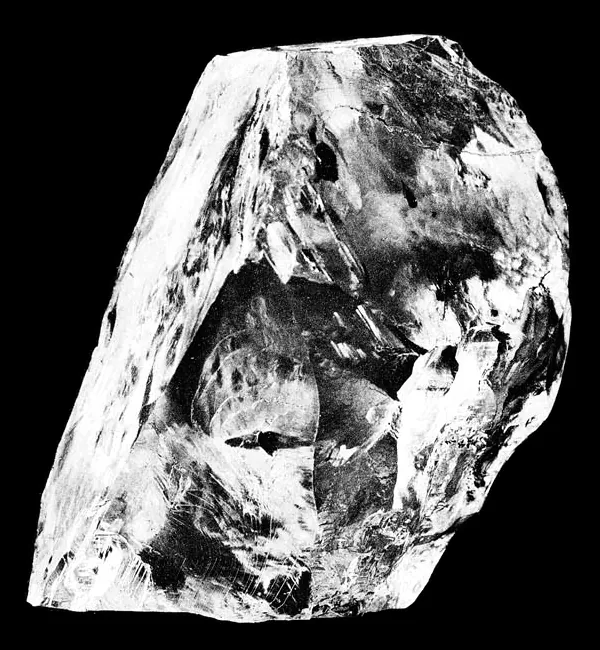
    The huge rough Cullinan diamond, photographed in 1905
    The Cullinan rough diamond, 3,106 carats, found in 1905. Photo: Unknown author, Public domain
    A diamond crystal embedded in dark kimberlite rock
    A diamond in kimberlite, the rock that brings diamonds up. Photo: Géry PARENT, Public domain

    What forms here

    Diamonds, including some very large ones. The mine is also known for rare blue diamonds, and it produced some of the world’s largest gem-quality diamonds.

    Why here (the geology)

    Diamonds form deep in Earth’s mantle, at least 150 kilometres down, where pressure and heat are enormous. Rare, fast, gas-rich volcanic eruptions rushed up in carrot-shaped pipes of kimberlite. They carried diamonds to the surface before they could change into graphite.

    Can you find or collect it?

    Working mine. Surface tours only; you cannot collect. Cullinan is an active mine run by a company, and visitors can take a surface tour in the town of Cullinan. Diamonds are not for amateur collecting here. Gem diamonds are heavily regulated, and conflict-free sourcing is important worldwide.

    Safety and legal

    Industrial mine. Tour only. Never enter the fence or the pit.

    Story / fun fact

    On 26 January 1905, the mine’s surface manager saw a huge crystal gleaming in the pit wall. The 3,106-carat (about 621 g) stone was the largest gem-quality rough diamond ever found. It was cut into nine major stones, and the two largest are now in the British Crown Jewels.

    南非库里南金刚石矿:金伯利岩管把深部地幔的钻石带到地表;1905年发现3106克拉原石;仅可参加地表参观,不可采集。

    The science

    How crystals grow, and the maths behind them

    1. How a crystal grows

    A crystal is a solid whose atoms or ions sit in a repeating three-dimensional pattern called a lattice. The smallest repeating block is the unit cell.

    1. Supersaturation. A solution holds more dissolved material than it normally could, for example after cooling or evaporating.
    2. Nucleation. A few ions clump into a stable seed.
    3. Layer by layer. More ions attach to the seed in the same repeating pattern. Flat faces (facets) appear.
    4. Growth continues as long as there is material and space.

    The dark dots are ions in the lattice; the pale blue dots are ions still dissolved.

    2. Cooling rate decides crystal size

    Slow cooling means few seeds and lots of time: big crystals. Fast cooling means many seeds that compete: tiny crystals. Very fast cooling (like lava hitting water) can freeze the atoms in a disorderly pattern and make volcanic glass, which is amorphous. Drag the slider.


    The Naica story in numbers

    Naica’s water stayed near 58 °C for at least 500,000 years. If an 11 m crystal grew for 500,000 years, its average growth is only about 0.022 mm per year, which is thinner than a human hair. That is what “slow” means. (See the maths problems below.)

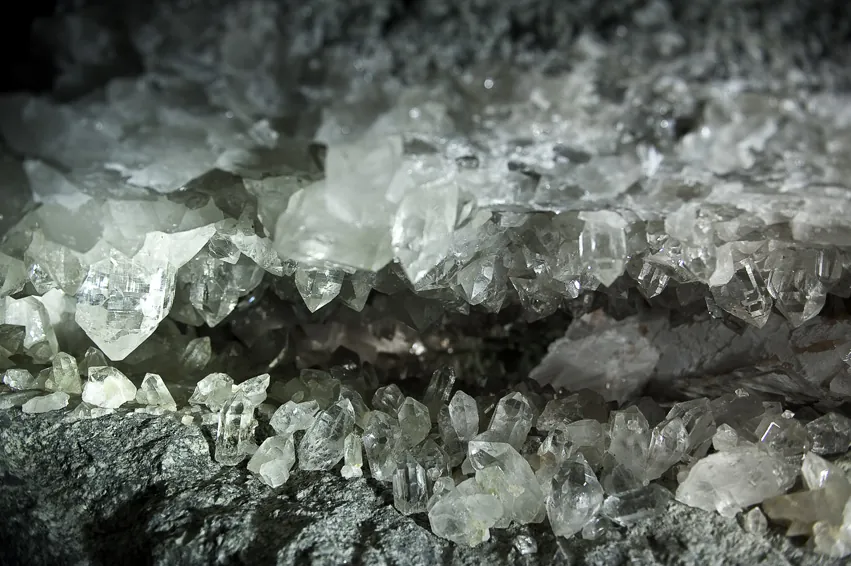
    A cluster of selenite (gypsum) crystals
    Selenite (gypsum) crystals in a smaller cluster. Credits

    Where big crystals form

    Big crystals need room, time and a steady supply. Pegmatites, hydrothermal veins, cavities (vugs, geodes) and cracks (fissures) provide that.

    A coarse-grained pegmatite rock outcrop with large crystals
    Pegmatite: a rock made of very large crystals. Credits

    3. The 7 crystal systems

    Every crystal fits one of seven systems, defined by the lengths of its axes (a, b, c) and the angles between them. Combine the systems with all the possible patterns of atoms and you get exactly 14 Bravais lattices and 230 space groups. Some books count trigonal inside the hexagonal family, which gives six families.

    Cubic

    Axes
    a = b = c
    Angles
    all angles 90°
    Examples
    fluorite, pyrite, halite, diamond

    Tetragonal

    Axes
    a = b ≠ c
    Angles
    all angles 90°
    Examples
    zircon, rutile, vesuvianite

    Orthorhombic

    Axes
    a ≠ b ≠ c
    Angles
    all angles 90°
    Examples
    topaz, olivine, barite, sulfur

    Hexagonal

    Axes
    a = b ≠ c
    Angles
    α = β = 90°, γ = 120°
    Examples
    beryl, apatite

    Trigonal

    Axes
    a = b = c (rhombohedral axes) or 3-fold symmetry
    Angles
    α = β = γ ≠ 90°
    Examples
    quartz, calcite, corundum, tourmaline

    Monoclinic

    Axes
    a ≠ b ≠ c
    Angles
    α = γ = 90°, β ≠ 90°
    Examples
    gypsum, orthoclase, mica

    Triclinic

    Axes
    a ≠ b ≠ c
    Angles
    no angle is 90°
    Examples
    turquoise, kyanite, albite

    The sketches are simplified unit-cell shapes. For the hexagonal system the drawing shows the typical six-sided prism. For trigonal, the rhombohedron is drawn with three equal edges and equal, non-right angles.

    The interactive exercise needs JavaScript.

    The interactive exercise needs JavaScript.

    4. The Mohs scale: a ladder, not a ruler

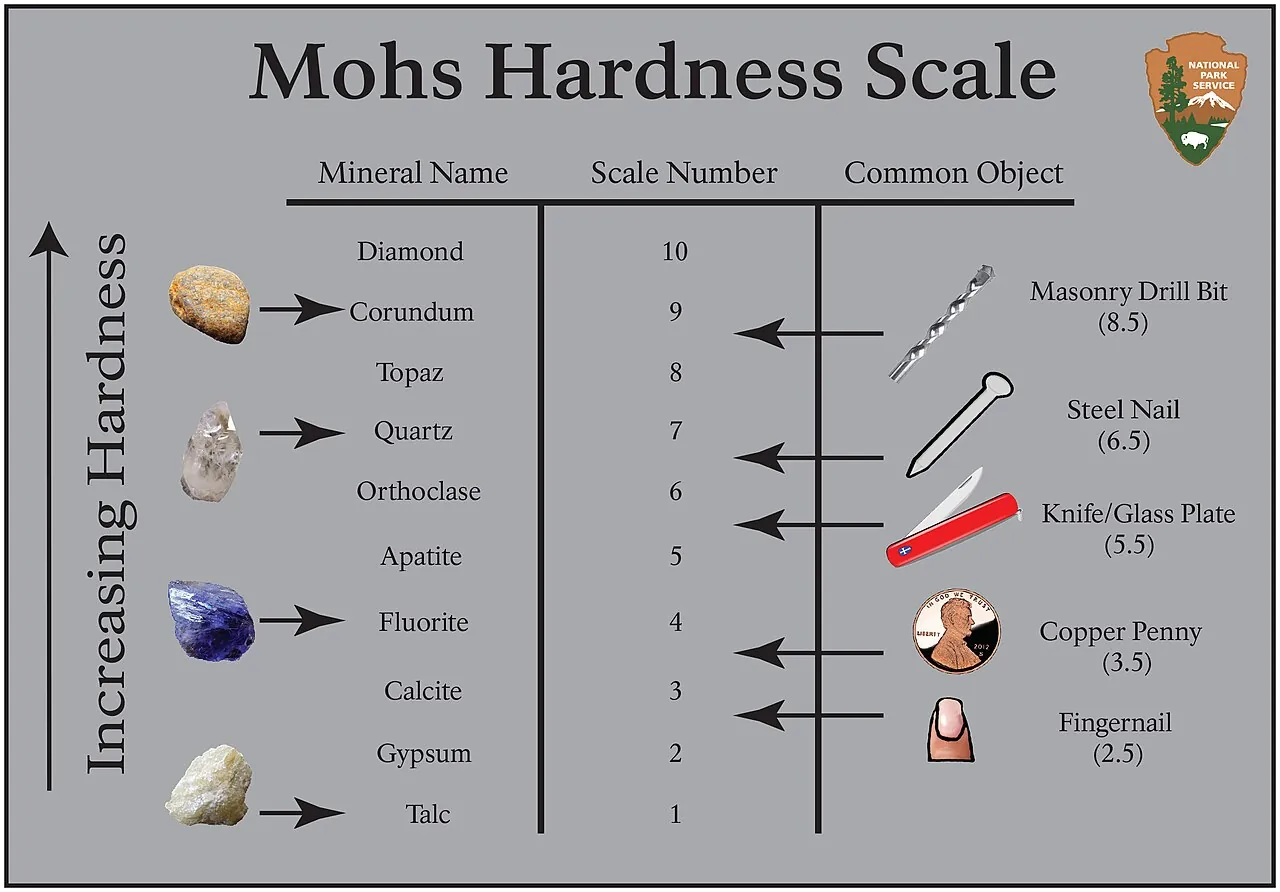
    Friedrich Mohs ranked ten minerals in 1812 by which one scratches which. The numbers show order only. Diamond (10) is not twice as hard as feldspar (6): measured by a scratching machine, diamond is about 20 times harder than feldspar. The chart shows approximate absolute hardness.

    Approximate absolute hardness on a sclerometer scale (Wikipedia, “Mohs scale of mineral hardness”).

    National Park Service chart of the Mohs hardness scale with everyday test objects
    The Mohs scale with everyday test objects. U.S. National Park Service, public domain
    Everyday hardness tests (approximate)
    ToolMohs hardness
    Fingernailabout 2.5
    Copper coinabout 3.5
    Iron nailabout 4.5
    Glass plate or steel knifeabout 5.5
    Steel fileabout 6.5

    The interactive exercise needs JavaScript.

    5. Math and physics of crystals

    Data you will need

    MineralDensity (g/cm³)
    Gypsum2.3
    Quartz2.65
    Calcite2.71
    Fluorite3.18
    Pyriteabout 5.0
    MaterialRefractive index n
    Air1.00
    Water1.33
    Quartzabout 1.54
    Diamondabout 2.42

    Density = mass ÷ volume.  Snell’s law: n₁ sin θ₁ = n₂ sin θ₂.  Critical angle: sin θc = n₂ ÷ n₁ (inside a diamond, n₂ = 1 for air).  Euler: V − E + F = 2.

    Printed text seen double through a clear calcite crystal because of birefringence
    Birefringence in calcite: one ray splits into two, so the writing looks doubled. Credits

    The interactive exercise needs JavaScript.

    The interactive exercise needs JavaScript.

    Purple and green octahedral fluorite crystals on a white surface
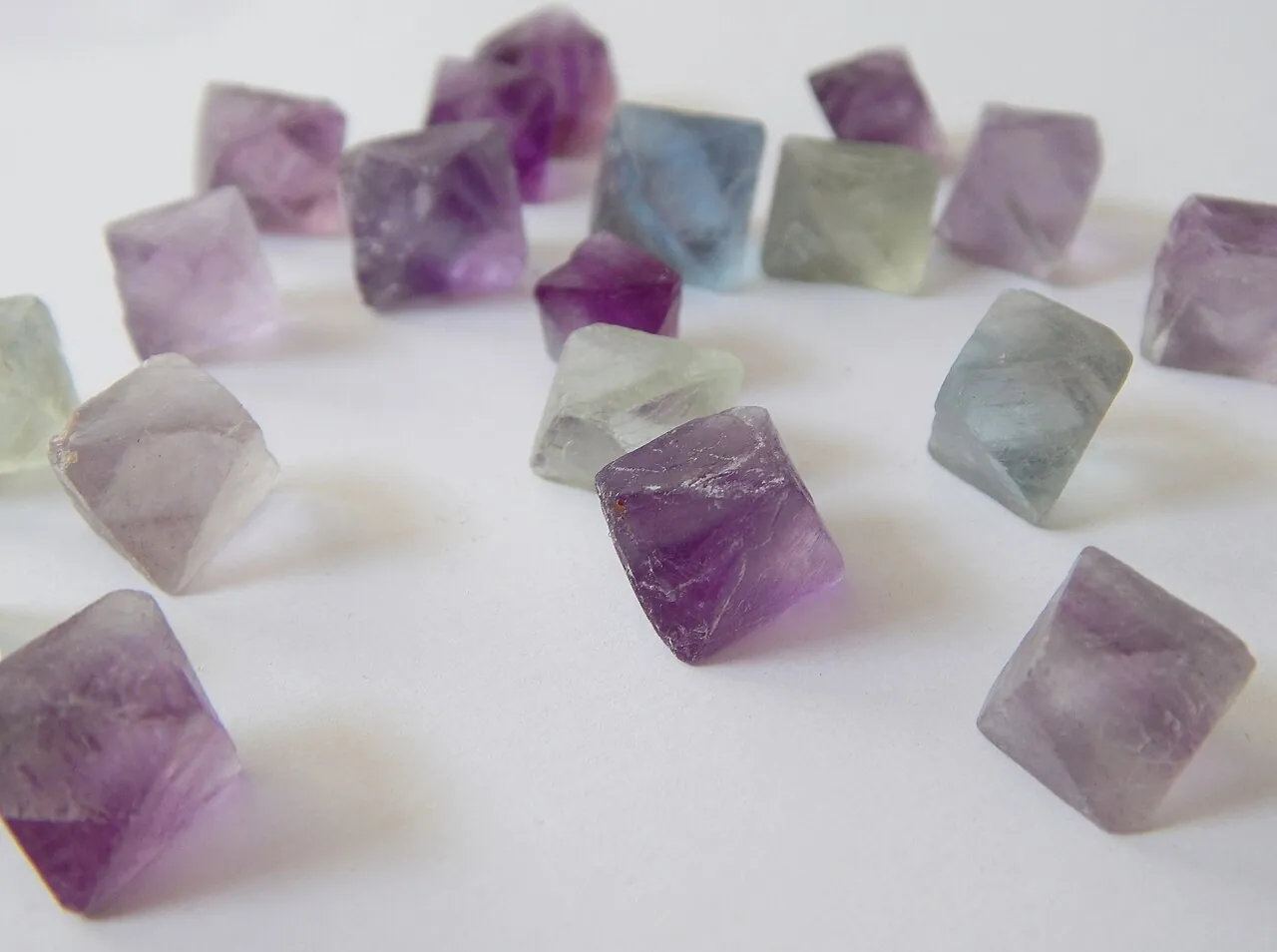
    Fluorite octahedra. A cube of fluorite cleaves into an octahedron: 6 vertices, 12 edges, 8 faces. Credits
    Small shiny cubic pyrite crystals on a gray rock
    Pyrite cubes: crystals can be perfect cubes, just like the lattice inside. Credits

    6. At-home mini-lab: grow your own crystal

    Crystals can grow in your kitchen. The best choice is alum (in China: 明矾, míngfán, potassium aluminium sulfate, often sold in pharmacies or supermarkets). It makes clear, eight-sided (octahedral) crystals. Easier choices: table salt (cubes, but they are small) or sugar (rock candy, about a week).

    Safety first

    • An adult handles all hot water.
    • Alum is not food. Do not taste it, keep it away from small children and pets, and wash your hands afterwards.
    • Use glass jars and protect the table. Do not pour solution down a sink without running water.
    1. Dissolve. An adult heats about 200 mL of water until it is very hot (not boiling). Stir in alum one spoonful at a time until no more dissolves. This is a saturated solution.
    2. Make seeds. Pour the clear liquid into a clean jar (leave undissolved powder behind). Cover loosely and leave it for 1 to 2 days. Small crystals form on the bottom.
    3. Choose the best seed. Pick the clearest crystal with flat faces, 2 to 4 mm wide. Tie it to a thin thread.
    4. Make fresh solution. Make a new saturated solution. Let it cool to room temperature (a warm solution would dissolve your seed). Hang the seed in the middle of the jar from a pencil, away from the walls.
    5. Wait and observe. Cover with a coffee filter. Measure the crystal with a ruler once a day. Do not move the jar.

    For salt or sugar: dissolve as much as you can in hot water, pour the clear liquid into a jar, hang a string or a skewer in it, and leave it for days. Rinse the string in the solution first so that crystals have a rough surface to start on.

    A clear alum crystal growing, next to a ruler measuring about 3 centimetres
    A growing alum crystal. Ruler in centimetres. Credits (CC0)
    A single large white sugar crystal made as rock candy
    A single rock-candy (sugar) crystal. Credits (CC0)

    Lab log (saved on this device)

    DayLength (mm)What I see
    0
    1
    2
    3
    5
    7

    Think and write (3 sentences): (1) What was your prediction for the crystal’s shape, and was it right? (2) Why did cooling make crystals appear? Use supersaturation and nucleation. (3) What happened to the growth rate over time? Calculate your average growth in mm per day.

    Seven skills for a strong academic English user

    Skills lab

    Every task gives feedback straight away. Try each one before you look at the model answer.

    aReading and inference

    The Room Where Crystals Had All the Time in the World

    Imagine opening a door and stepping into a room as hot as a sauna, where the air is so wet that sweat cannot evaporate from your skin. Around you, pale beams as long as school buses lean across the floor like fallen tree trunks. This is the Cave of the Crystals in Naica, Mexico, and almost nobody has ever stood inside it.

    In the year 2000, two miners were digging a new tunnel about 300 metres underground when they broke into a hidden cavity. The mine was already famous for lead, zinc and silver, but the cave was something else. Its crystals were made of selenite, the clear form of gypsum, a mineral so soft that a fingernail can scratch it. Some of the crystals were more than eleven metres long.

    Scientists soon worked out why the crystals were so large. For hundreds of thousands of years, hot water had filled the cave. A body of magma deep below kept the water close to 58 degrees Celsius. At that temperature the mineral anhydrite slowly dissolves while gypsum slowly grows, and the temperature barely changed. Because the water cooled by only a tiny amount, the solution was just barely supersaturated, so only a few seeds formed, and each seed was fed for a very long time. Researchers estimate that the biggest crystals grew for at least 500,000 years, adding a layer thinner than a human hair every year.

    The same conditions that built the crystals made the cave dangerous. Without protection, a person can survive only about ten minutes before the heat becomes life-threatening. Explorers wore cooling suits and breathing masks, and even so their work shifts were short. All the while, the mine's pumps ran day and night to keep groundwater out of the tunnels. In 2015 the pumping stopped, and the water began to rise again.

    The Naica story teaches an important lesson: the largest crystals do not need violence or speed. They need stability and patience. It also raises a difficult question. When a place is this rare, who should be allowed to enter? Compare it with a family dig in New York, where visitors split open rock for a few hours and go home with a crystal. Both places hold crystals, yet the rules, risks and rewards are completely different. Perhaps, in the end, the returning water is doing what no law could: keeping the cave safe, and giving the crystals a chance to grow once more.

    About 410 words. Original text written for this class. Facts from the Naica sources listed at the end.
    The interactive exercise needs JavaScript.

    The interactive exercise needs JavaScript.

    The interactive exercise needs JavaScript.

    bClaim–Evidence–Reasoning (CER)

    A strong scientific paragraph has three parts.

    ClaimOne sentence that answers the question. The crystal is …
    EvidenceFacts and data from observation. It scratched … It did not … Its density was …
    ReasoningWhy the evidence supports the claim, using science. Because … therefore … This matches …

    Mystery crystal data

    TestMystery crystalQuartzCalcite
    Hardnessscratches window glass and a steel file73
    Weak acidno fizzingno fizzfizzes
    Breakscurved fracture, no flat planesconchoidal fracture3 cleavage directions
    Specific gravity2.652.652.71

    The interactive exercise needs JavaScript.

    cSummarizing and paraphrasing

    Paraphrase = same meaning, new words and new structure, same length. Summary = only the main idea, much shorter. Steps: (1) read twice; (2) cover the text; (3) write from memory; (4) check that facts and technical terms are right; (5) cite the source if you copy a phrase.

    The interactive exercise needs JavaScript.

    The interactive exercise needs JavaScript.

    dVocabulary in context and collocations

    A collocation is a pair of words that go together naturally. Learn verbs with their nouns: not “do a permit” but “apply for a permit”.

    The interactive exercise needs JavaScript.

    The interactive exercise needs JavaScript.

    eFinal project: teach a video about YOUR crystals

    You already know a lot about crystals, so now you are the teacher. Choose one crystal from your own collection (or one of the ten spots). First write your script of 150 to 200 words. Then film a 2 to 3 minute teaching video and use at least 8 words from the 100-word list.

    Part 1: Meet the crystalShow it to the camera. Say its name, its color, and where it comes from. Add one number.
    Part 2: How it formedExplain why it forms there (geology). Use at least three words from the list, such as lattice, cleavage or hydrothermal.
    Part 3: Find it and a fun factHow do people find it? Mention safety and rules, then finish with one fun fact.

    Your 2 to 3 minute video

    1. Hook (10 s): hold up your crystal and ask a surprising question.
    2. Meet the crystal (30 s): name, color, where it is from.
    3. How it formed (60 s): the science, with one number and a few new words.
    4. How to find it and stay safe (30 s).
    5. Close (20 s): “To sum up…” and one question for the people watching.

    Film tips: good light, hold the crystal close, speak slowly, and do two or three takes. Practise with the timer first. Speak English only; you can use your script as notes, but try not to read every word.

    fPresentation phrases and the debate

    OpeningToday I would like to introduce…
    I am going to talk about…
    Giving evidenceAccording to the data…
    For example, at Naica…
    ContrastingOn the other hand…
    However, …
    Although …
    Explaining a causeThis happens because…
    As a result, …
    ConcludingTo sum up…
    In conclusion…
    Inviting questionsI would be happy to answer any questions.

    The interactive exercise needs JavaScript.

    Debate: Should rare crystal sites be closed to collectors?

    Yes, close them
    • Naica’s cave is too rare and too dangerous, so only scientists went in.
    • Gerstenegg was protected within months of its discovery and can be visited only on a guided tour.
    • A crystal that is taken cannot be studied in place again.
    No, keep access (with rules)
    • Herkimer and Mount Ida let families dig legally, and many young people become geologists after doing so.
    • Collecting on private land with permission gives landowners an income to look after the site.
    • Specimens in museums and homes can teach more people than crystals left underground.

    Prepare both sides. A good debater can argue against their own opinion first.


    The interactive exercise needs JavaScript.

    The interactive exercise needs JavaScript.

    The interactive exercise needs JavaScript.

    The interactive exercise needs JavaScript.

    gWriting prompt, with a model answer to compare

    Write first. The model answer appears only after you reach the minimum number of words. Use at least five words from the list. Your draft is saved on this device.

    The interactive exercise needs JavaScript.

    Spaced review

    Review all 100 words

    This quiz remembers which words you know and brings back the hard ones sooner. Words you answer correctly move to a higher box and come back after 1, 3, 7, 14 and then 30 days. Do a short session every day.

    Progress is saved only in this browser.

    Final step

    Send me your teaching video

    Send Reed your teaching video in WeChat (2 to 3 minutes).

    1. Show one crystal from your own collection, or one of the ten spots.
    2. Teach how it formed, using at least 8 words from the list.
    3. Give one number or fact, and tell people how to find it safely.
    4. End with a question for the people watching.

    Only send it to your teacher in WeChat. Do not say your full name, school, or address in the video. Showing just your hands and your crystals is fine. Mistakes are fine too; I will watch it and reply with feedback and your next class.

    WeChat QR code for Teacher Reed

    WeChat ID: EnglishTeacherReed

    Open WeChat, find Teacher Reed (scan the QR code or search the ID), paste the message, and attach your video. A video on your phone is best. If the file is too big, ask a parent to help or tell me.

    Sources and credits

    Photo credits and sources

    All photographs were found on Wikimedia Commons under open licenses (CC0, CC BY, CC BY-SA or public domain). They were resized and compressed for this page and stored on this site. No photographs of people are used except the tiny figure for scale in the Naica photo. Map land shapes: Natural Earth, public domain. Diagrams and text are original.

    1. Crystals Halite on matrix.jpg. Author: IvanSakhno. License: CC BY 4.0. Source: https://commons.wikimedia.org/wiki/File:Crystals_Halite_on_matrix.jpg. Changes: resized and compressed.
    2. 3310.calcite (Iceland Spar) birefringence.jpg. Author: Furrfu. License: Public domain. Source: https://commons.wikimedia.org/wiki/File:3310.calcite_(Iceland_Spar)_birefringence.jpg. Changes: resized and compressed.
    3. Fluorite Xianghuapu Minéraux SU.jpg. Author: Marie-Lan Taÿ Pamart. License: CC BY 4.0. Source: https://commons.wikimedia.org/wiki/File:Fluorite_Xianghuapu_Min%C3%A9raux_SU.jpg. Changes: resized and compressed.
    4. Amethyst geode Planalto MNHN Minéralogie n3.jpg. Author: Marie-Lan Taÿ Pamart. License: CC BY 4.0. Source: https://commons.wikimedia.org/wiki/File:Amethyst_geode_Planalto_MNHN_Min%C3%A9ralogie_n3.jpg. Changes: resized and compressed.
    5. Diamond, kimberlite 1.jpg. Author: Géry PARENT. License: Public domain. Source: https://commons.wikimedia.org/wiki/File:Diamond,_kimberlite_1.jpg. Changes: resized and compressed.
    6. Topaze impériale (Mine de Vermelhão, Saramenha, Ouro Preto, Minas Gerais - Brésil).jpg. Author: Parent Géry. License: Public domain. Source: https://commons.wikimedia.org/wiki/File:Topaze_imp%C3%A9riale_(Mine_de_Vermelh%C3%A3o,_Saramenha,_Ouro_Preto,_Minas_Gerais_-_Br%C3%A9sil).jpg. Changes: resized and compressed.
    7. Geological hammer.jpg. Author: Chmee2. License: CC BY-SA 3.0. Source: https://commons.wikimedia.org/wiki/File:Geological_hammer.jpg. Changes: resized and compressed.
    8. South Africa-Cullinan Premier Mine02.jpg. Author: Paul Parsons (paulus.parsons@gmail.com). License: CC BY-SA 3.0. Source: https://commons.wikimedia.org/wiki/File:South_Africa-Cullinan_Premier_Mine02.jpg. Changes: resized and compressed.
    9. BelOMO 10× achromatic triplet loupe 1.jpg. Author: Francis Flinch. License: CC BY-SA 4.0. Source: https://commons.wikimedia.org/wiki/File:BelOMO_10%C3%97_achromatic_triplet_loupe_1.jpg. Changes: resized and compressed.
    10. Seil - pyrite cubes 02.JPG. Author: Remi Mathis. License: CC BY-SA 3.0. Source: https://commons.wikimedia.org/wiki/File:Seil_-_pyrite_cubes_02.JPG. Changes: resized and compressed.
    11. Cristales cueva de Naica.JPG. Author: Alexander Van Driessche. License: CC BY 3.0. Source: https://commons.wikimedia.org/wiki/File:Cristales_cueva_de_Naica.JPG. Changes: resized and compressed.
    12. Herkimer.jpg. Author: Didier Descouens. License: CC BY-SA 4.0. Source: https://commons.wikimedia.org/wiki/File:Herkimer.jpg. Changes: resized and compressed.
    13. Quartz ("Herkimer Diamond") (near Herkimer, New York State, USA) 2.jpg. Author: James St. John. License: CC BY 2.0. Source: https://commons.wikimedia.org/wiki/File:Quartz_(%22Herkimer_Diamond%22)_(near_Herkimer,_New_York_State,_USA)_2.jpg. Changes: resized and compressed.
    14. Hydrothermal quartz crystals (Late Pennsylvanian to Permian; Coleman Quartz Mine, Arkansas, USA) 2.jpg. Author: James St. John. License: CC BY 2.0. Source: https://commons.wikimedia.org/wiki/File:Hydrothermal_quartz_crystals_(Late_Pennsylvanian_to_Permian;_Coleman_Quartz_Mine,_Arkansas,_USA)_2.jpg. Changes: resized and compressed.
    15. Quarzo, da ida mountain, arkansas, usa.JPG. Author: Sailko. License: CC BY 3.0. Source: https://commons.wikimedia.org/wiki/File:Quarzo,_da_ida_mountain,_arkansas,_usa.JPG. Changes: resized and compressed.
    16. Tourmaline from Crocero, Minas Gerais.jpg. Author: LZ6387. License: CC BY-SA 4.0. Source: https://commons.wikimedia.org/wiki/File:Tourmaline_from_Crocero,_Minas_Gerais.jpg. Changes: resized and compressed.
    17. Indicolite et lépidolite (Minas Gerais - Brasil).jpg. Author: Parent Géry. License: CC BY-SA 3.0. Source: https://commons.wikimedia.org/wiki/File:Indicolite_et_l%C3%A9pidolite_(Minas_Gerais_-_Brasil).jpg. Changes: resized and compressed.
    18. 2546,Azurit,Tsumeb,Afrika,123g (1).jpg. Author: Holger Krause. License: CC BY-SA 4.0. Source: https://commons.wikimedia.org/wiki/File:2546,Azurit,Tsumeb,Afrika,123g_(1).jpg. Changes: resized and compressed.
    19. Kristallkluft Gerstenegg.jpg. Author: Kraftwerke Oberhasli AG. License: CC BY-SA 3.0 de. Source: https://commons.wikimedia.org/wiki/File:Kristallkluft_Gerstenegg.jpg. Changes: resized and compressed.
    20. Quartz (Cavradi Gorge, Switzerland) 14.jpg. Author: James St. John. License: CC BY 2.0. Source: https://commons.wikimedia.org/wiki/File:Quartz_(Cavradi_Gorge,_Switzerland)_14.jpg. Changes: resized and compressed.
    21. Ruby Land of Myanmar(Mogok).jpg. Author: Ko_Tar_Gyi. License: CC BY-SA 4.0. Source: https://commons.wikimedia.org/wiki/File:Ruby_Land_of_Myanmar(Mogok).jpg. Changes: resized and compressed.
    22. Spinel (Mogok Metamorphic Belt, Jurassic to Miocene; Momeik Township, Shan State, Burma).jpg. Author: James St. John. License: CC BY 2.0. Source: https://commons.wikimedia.org/wiki/File:Spinel_(Mogok_Metamorphic_Belt,_Jurassic_to_Miocene;_Momeik_Township,_Shan_State,_Burma).jpg. Changes: resized and compressed.
    23. Fluorite (Late Jurassic; Yaogangxian Mine, Hunan Province, China) 1 (34521392876).jpg. Author: James St. John. License: CC BY 2.0. Source: https://commons.wikimedia.org/wiki/File:Fluorite_(Late_Jurassic;_Yaogangxian_Mine,_Hunan_Province,_China)_1_(34521392876).jpg. Changes: resized and compressed.
    24. Fluoryt na aragonicie - Yaogangxian Mine, Hunan, Chiny.jpg. Author: Lech Darski. License: CC BY-SA 4.0. Source: https://commons.wikimedia.org/wiki/File:Fluoryt_na_aragonicie_-_Yaogangxian_Mine,_Hunan,_Chiny.jpg. Changes: resized and compressed.
    25. Wolframite, arsénopyrite, quartz, calcite.jpg. Author: Parent Géry. License: CC BY-SA 3.0. Source: https://commons.wikimedia.org/wiki/File:Wolframite,_ars%C3%A9nopyrite,_quartz,_calcite.jpg. Changes: resized and compressed.
    26. Rough cullinan diamond.jpg. Author: Unknown author. License: Public domain. Source: https://commons.wikimedia.org/wiki/File:Rough_cullinan_diamond.jpg. Changes: resized and compressed.
    27. Mohs.jpg. Author: National Park Service. License: Public domain. Source: https://commons.wikimedia.org/wiki/File:Mohs.jpg. Changes: resized and compressed.
    28. Fluorite octahedrons.jpg. Author: Amy M Lavine. License: CC BY-SA 4.0. Source: https://commons.wikimedia.org/wiki/File:Fluorite_octahedrons.jpg. Changes: resized and compressed.
    29. Pegmatite Outcrop in Nashua, New Hampshire (55389728596).jpg. Author: Kevin M. Gill. License: CC BY 4.0. Source: https://commons.wikimedia.org/wiki/File:Pegmatite_Outcrop_in_Nashua,_New_Hampshire_(55389728596).jpg. Changes: resized and compressed.
    30. NM Selenite Crystal Cluster.jpg. Author: Bryan Barnes. License: CC BY-SA 4.0. Source: https://commons.wikimedia.org/wiki/File:NM_Selenite_Crystal_Cluster.jpg. Changes: resized and compressed.
    31. Alaunkristall Wachstum 02.jpg. Author: Rhetos. License: CC0. Source: https://commons.wikimedia.org/wiki/File:Alaunkristall_Wachstum_02.jpg. Changes: resized and compressed.
    32. Single crystal white rock candy.jpg. Author: Fumikas Sagisavas. License: CC0. Source: https://commons.wikimedia.org/wiki/File:Single_crystal_white_rock_candy.jpg. Changes: resized and compressed.

    Fact sources

    • Naica: Wikipedia “Cave of the Crystals”; García-Ruiz et al. (2007), “Formation of natural gypsum megacrystals in Naica”, Geology; National Geographic “Giant Crystal Cave”.
    • Herkimer: Wikipedia “Herkimer diamond”; herkimerdiamond.com; geology.com “Herkimer Diamonds”.
    • Mount Ida / Arkansas: U.S. Forest Service, Ouachita National Forest (Crystal Vista and collecting rules); Encyclopedia of Arkansas “Quartz Mining”; Arkansas Geological Survey “Arkansas Quartz Crystals”.
    • Minas Gerais: GIA “Capão Topaz Deposit, Ouro Preto”; Mindat locality data.
    • Tsumeb: Wikipedia “Tsumeb”; Harvard Mineralogical Museum, Tsumeb mineral notes.
    • Swiss Alps: showcaves.com “Kristallkluft Gerstenegg”; Grimselwelt “Grimsel Undergrund” tour; Canton of Bern rules for crystal collecting (Strahlen).
    • Mogok: Wikipedia “Mogok”. Xianghuapu and Yaogangxian: Mindat locality pages.
    • Cullinan: Wikipedia “Cullinan Diamond”; Petra Diamonds, Cullinan Mine; Diamond Tours Cullinan.
    • Mohs scale, refractive indices, densities: Wikipedia “Mohs scale of mineral hardness”; U.S. National Park Service; standard mineralogy references.
    • Crystal growth experiments: University of Otago chemistry “Growing crystals”.